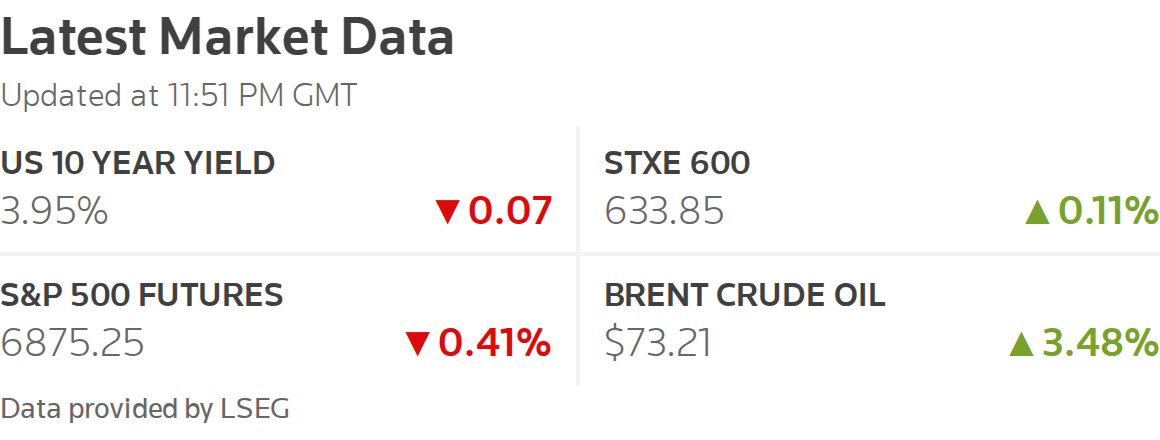
With the Iran war nearing its third month, investors are waking up to the worry that the conflict may deliver a lasting inflationary shock, with sovereign bond yields racing to decade highs and threatening a severe hit to the spending power of governments, businesses and households.
G7 finance ministers acknowledged mounting concern over public debt and bond market volatility as they met in Paris on Monday and sought common ground on tackling global economic tensions and coordinating critical raw material supplies.
The bond selloff abated in Asia on Tuesday, with U.S. Treasury yields and Japanese government bond yields easing, but not far from milestone highs.
The average rate at which governments in the G7 nations pay to borrow for 10 years is approaching 4%, up from around 3.2% before the war started in late February.
Elsewhere, data on Tuesday showed Japan's economy grew faster than expected in the first quarter on solid exports and consumption, though momentum will face a severe test as the full force of the energy shock from the Iran war filters through businesses and consumers.
The upbeat numbers did little to help the yen, which was languishing around the 159 per dollar level , keeping traders on alert for potential intervention from Japanese authorities.
In Australia, minutes of the central bank's May board meeting showed policymakers judged interest rates to be restrictive after three hikes this year, giving it space to watch how the war plays out, even though inflation is set to trend higher and economic growth to slow.








No comments:
Post a Comment