A look at the day ahead in European and global markets
|
|
|
|
By Stella Qiu, Asia Finance & Markets Breaking News Correspondent
|
|
|
|
|
Treasuries are meant to be markets' quiet backwater. When they start dominating headlines and trading like a retail-driven Korean stock market, something has clearly gone awry.
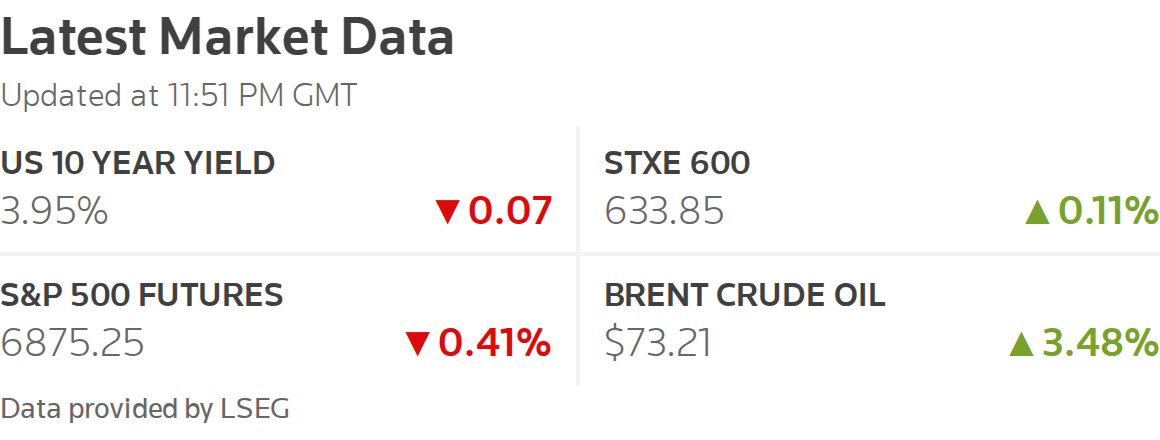
In just two sessions, the benchmark US 10-year yield ripped through the 5% barrier and kept going, hitting a fresh 19-year high of 5.2251% overnight.
|
|
|
|
A general view of the entrance to the U.S. Department Of The Treasury in Washington, D.C., U.S., February 1, 2026. REUTERS/Ken Cedeno/File Photo
|
That is a rise of nearly 20 basis points in two days, the kind of move last seen when Trump's Liberation Day tariffs sent markets into a tailspin. This time, no such trigger is apparent.
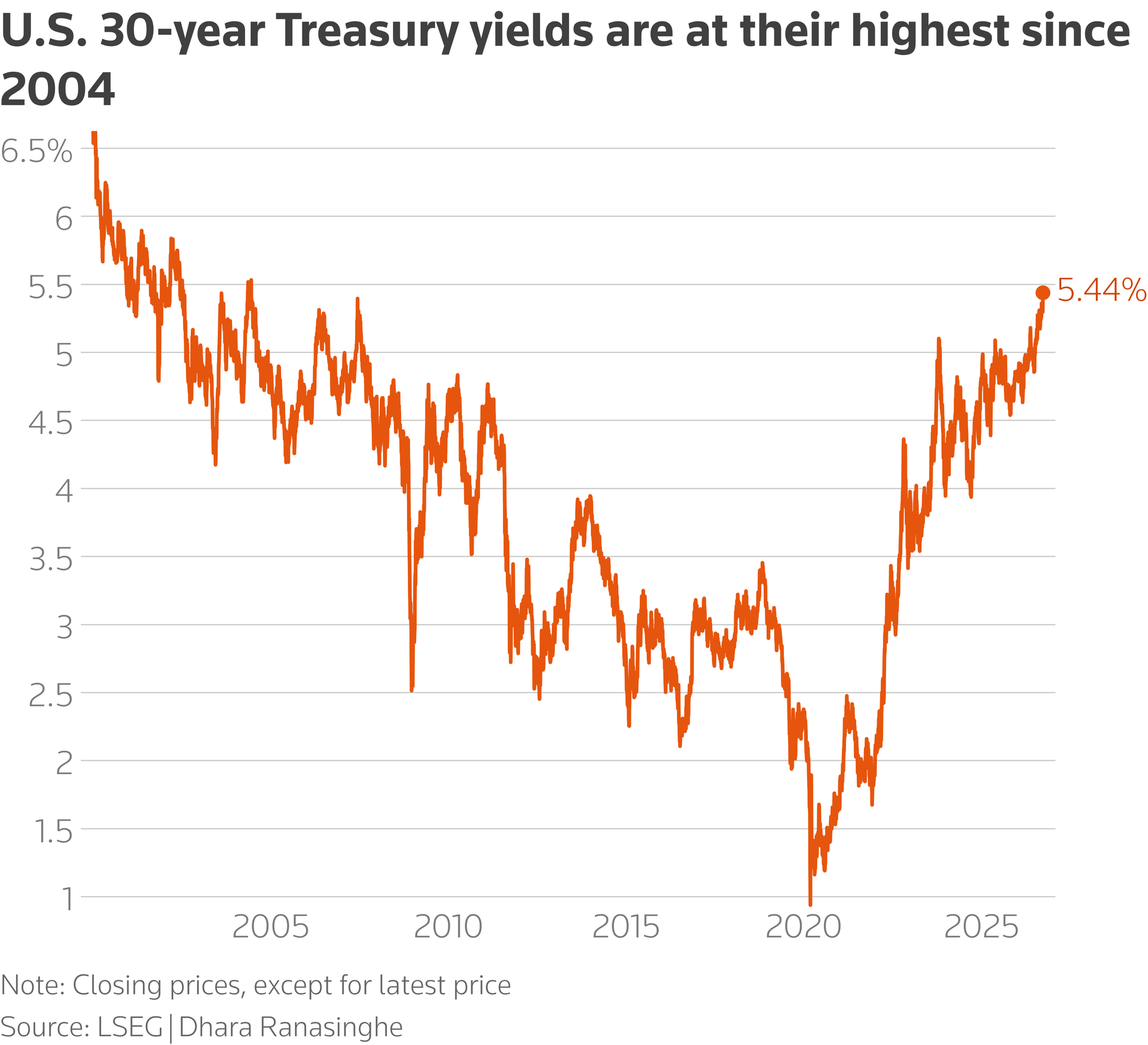
The long bond went further still. Thirty-year yields jumped 16 bps to 5.5016%, the highest since 2004. Remember when Treasury Secretary Bessent stepped in with more buybacks to defend the 5.3% level? That was only a month ago, and yields are at 5.48%. The latest buyback overnight was a damp squib, managing just $4 billion of the $6 billion scheduled.
When risk free money costs more than 5% in the world's largest economy, every asset class faces a reckoning. Governments face steeper borrowing costs to finance their swelling deficits, AI giants must justify their ever large spending plans households confront higher mortgage costs, raising the price of buying a home.
The sell-off has spilled into Asia. Japan's government yields surged to levels not seen since 1996 and Australia's 10-year yields are on the cusp of hitting a new 15-year high.
|
Graphics are produced by Reuters
|
|
|
|
Higher rates clash with stock's bull run |
Higher yields will tighten U.S. financial conditions over time, but futures are still pricing in a 70% chance of a follow up rate hike from the Federal Reserve next month. As much as 90 bps of tightening is priced for this cycle.
Even Scandinavian central banks got the message. Norway's Norges Bank surprised with a rate hike and Sweden's Riksbank signalled it was likely to follow suit by the year end.
Will higher rates kill the stock market bull run? Not if AI fever has a vote. Tech investors remain largely unfazed, with Nasdaq futures holding steady. Most Asian markets were shut on Friday, but Japan's Nikkei rose 1.2%.
European shares are set for a higher open, with pan-region stock futures up 0.6%, helped along by oil slipping 1%.
But Brent is still at $105 a barrel, the Middle East war is no closer to resolution, and Trump is too busy entertaining Chinese President Xi Jinping to read the papers on 7% mortgage rates. Then again, he doesn't have one, so the pain is someone else's.
|
|
|
|
Key developments that could influence markets on Friday: |
- US durable goods order for August
- NY Fed President John William, BoE Governor Andrew Bailey speak at a conference in the UK.
|
|
|
|
Opinions expressed are those of the author. They do not reflect the views of Reuters News, which, under the Trust Principles, is committed to integrity, independence, and freedom from bias.
|
|
|
|
|
|
| |
|
|
Morning Bid is sent every weekday morning. Think your friend or colleague should know about us? Forward this newsletter to them. They can also sign up here. Want to stop receiving this email? Unsubscribe here. To manage which newsletters you're signed up for, click here. This email includes limited tracking for Reuters to understand whether you’ve engaged with its contents. For more information on how we process your personal information and your rights, please see our Privacy Statement. Terms & Conditions |
|
| |
© 2026 Thomson Reuters. All rights reserved.
3 Times Square, New York, NY 10036 |
|
|
|
|
|







No comments:
Post a Comment