By Nidhi C Sai, Editor Online Production, with global Reuters staff
|
|
|
|
In a victory for young Indians, a nationwide protest has forced one of Prime Minister Narendra Modi's biggest political climbdowns. However, the deep anxieties that fuelled the movement — over education, employment and the future — remain.
As the country seeks to harness the potential of a population where two-thirds are under 35, can it create enough good jobs for a generation expected to drive the next phase of growth? Write to me at nidhi.csai@thomsonreuters.com.
And, the Iran war is forcing Diet Coke to switch to a bigger can with a heftier price tag in India. Scroll down for that and more in this week's must-reads.
|
|
|
A generation waiting for work |
A supporter of India's Cockroach Janta Party (CJP) celebrates after Education Minister Dharmendra Pradhan resigned, in New Delhi, India, July 25, 2026. REUTERS/Adnan Abidi
|
Jubilant celebrations on Saturday at Jantar Mantar — a longtime protest site in the heart of the capital — marked the end of a month-long campaign that rapidly gathered support across the country.
The viral Cockroach Janta Party (CJP), which started as online satire before swelling into a nationwide movement, called off demonstrations after the government bowed to all its demands, including the resignation of Education Minister Dharmendra Pradhan and reforms to the examination system.
What sparked the protests was the leak of question papers for the National Eligibility-cum-Entrance Test (NEET), India's extremely competitive and high-stakes medical school entrance exam. But they soon evolved into a broader expression of frustration among young people about opportunity and accountability.
Already the fastest-growing major economy, India is expected to become the world's third-largest economy this decade. But that projection rests heavily on India's demographic advantage, and requires young people moving from classrooms into productive employment.
Recent government data suggest the labour market has become increasingly difficult for young people to enter. India's official youth unemployment rate stood at 9.9% last year, more than three times the overall unemployment rate of 3.1%.
The simmering anxiety among India's youth was evident in a Deloitte Global survey published in May.
"Gen Zs report higher financial stress, with a larger proportion highlighting home affordability challenges and financial insecurity,” the survey said.
Also read how India's Instagram generation has dented Modi's aura ahead of key state polls, by Reuters journalists Krishna N. Das and Tora Agarwala.
|
|
|
|
Modi announced on Sunday the creation of a task force headed by tech entrepreneur Nandan Nilekani to overhaul India's examination system.
In India, entrance exams are much more than academic milestones — they are a gateway to professional careers that promise stable employment, financial security and social mobility.
More than 2 million students sat the NEET examination this year, yet government data show that only around 6% ultimately secure a medical college seat.
Families often spend years — and sometimes their life savings — on extra coaching, accommodation and study materials in the hope of securing one of those coveted spots.
When confidence in that pathway is shaken, the ramifications are immense.
"The youth of India have finally awakened to the seriousness of the problem," education activist Nandita Narain told Reuters. "The anger that was building up for some time has come to the surface."
Read how the NEET exam scandal, and the families who say it drove students to suicide, helped fuel a youth uprising that forced political change, reported by Aftab Ahmed, Saurabh Sharma and Sumit Khanna.
|
|
|
|
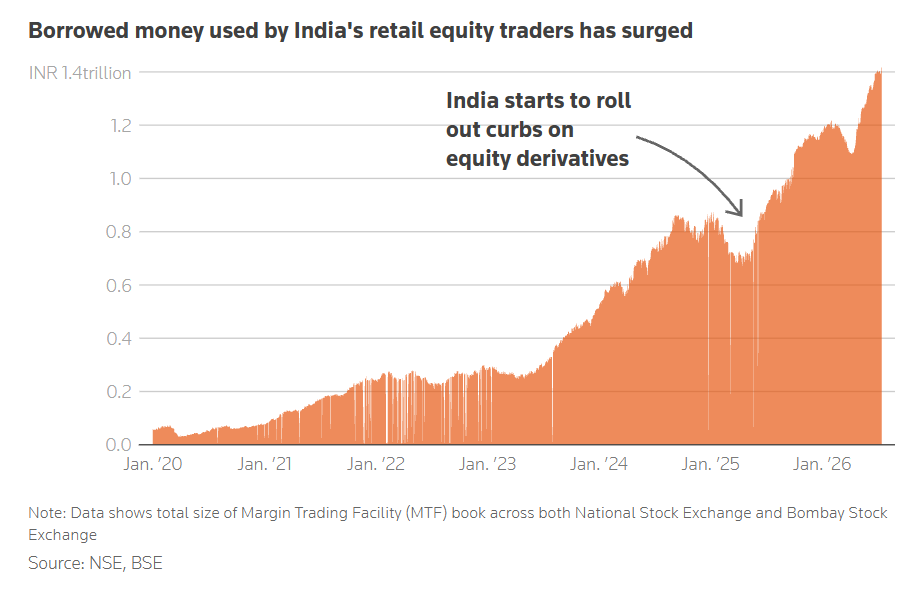
India's crackdown on derivatives trading is pushing some retail investors toward margin-funded stock bets instead.
The shift has fuelled a surge in broker loans, raising fresh concerns about speculative risk and financial stability. Read this in-depth report by Reuters journalists Jayshree P Upadhyay and Jaspreet Kalra.
|
|
|
|
- Coca-Cola has raised the price of Diet Coke in India by more than 10% after the Middle East conflict disrupted aluminium can supplies through the Strait of Hormuz, forcing it to source larger, pricier cans from Southeast Asia. Unlike most other markets, Diet Coke is sold mainly in cans in India, making it more vulnerable to disruptions, writes Aditya Kalra in this exclusive report.
- As India pushes local manufacturing, some solar panel makers are being forced to shut factories while waiting months for domestic components to replace Chinese imports. Read this analysis by Sethuraman N R and Colleen Howe.
- India has reprimanded its aviation safety regulator for failing to prevent officials from using their influence to help family members secure industry jobs, writes Abhijith Ganapavaram.
- The Indian rupee's return to near-record lows is leaving investors guessing how much weakness the central bank is willing to tolerate. Read this analysis by Gopika Gopakumar, Jaspreet Kalra and Nimesh Vora.
- The return of cricket to the 2028 Olympics in Los Angeles reflects a strategic calculation by Olympic leaders that the surest route to billions of new viewers runs through India, cricket’s commercial heartland, writes Reuters journalists Karolos Grohmann and Amlan Chakraborty.
|
|
|
|
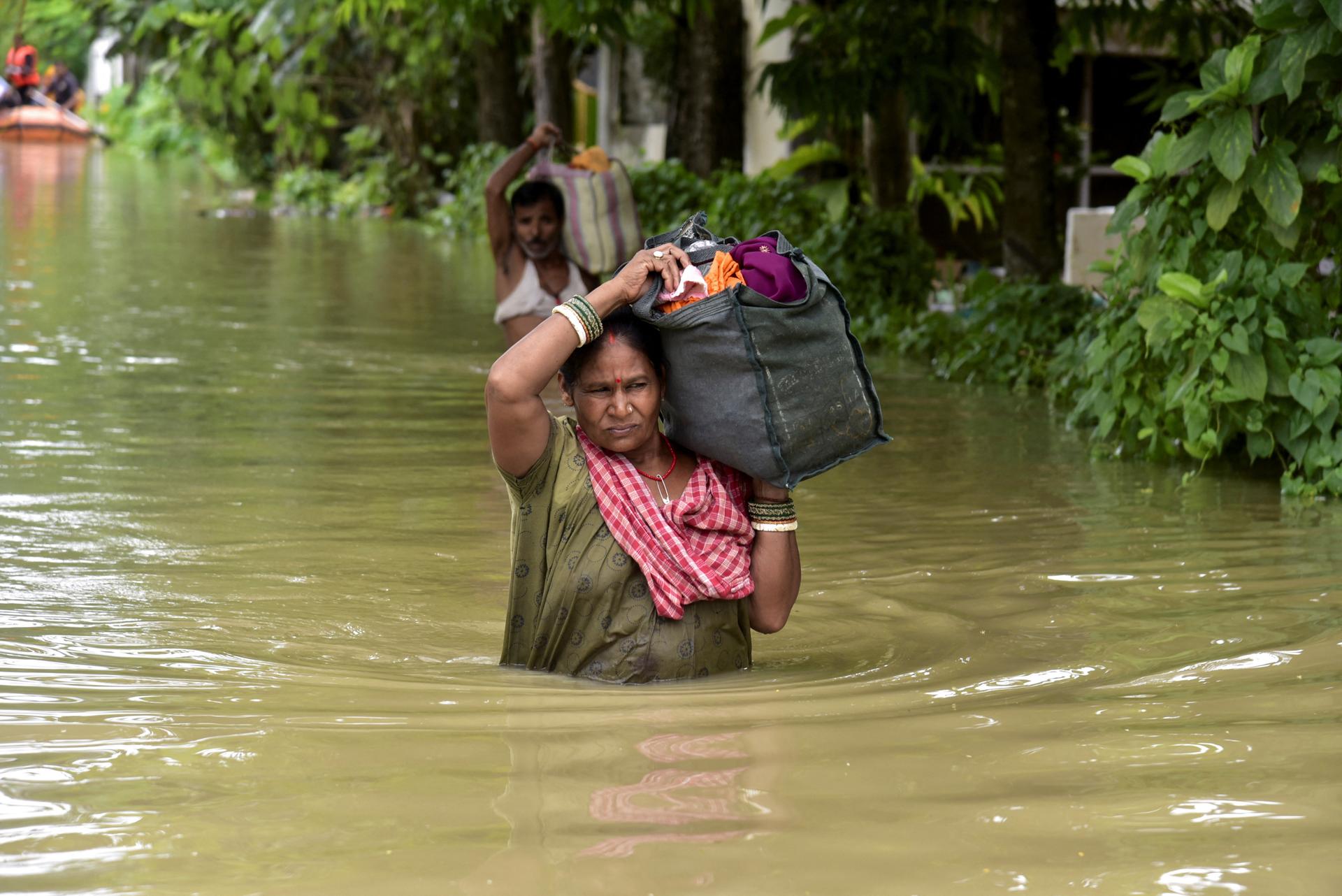
People wade through a flood-affected area with their belongings in Sivasagar, Assam, India, July 23, 2026. REUTERS/Hafiz Ahmed
|
Several people have died and more than 650,000 have been affected by severe flooding in Assam after days of heavy rain, with state authorities describing the damage as "unprecedented".
|
|
|
|
This newsletter was edited by Kevin Buckland in Tokyo.
|
|
|
|
|
| |
|
|
Reuters India File is sent once a week. Think your friend or colleague should know about us? Forward this newsletter to them. They can also sign up here. Want to stop receiving this email? Unsubscribe here. To manage which newsletters you're signed up for, click here. This email includes limited tracking for Reuters to understand whether you’ve engaged with its contents. For more information on how we process your personal information and your rights, please see our Privacy Statement. Terms & Conditions |
|
| |
© 2026 Thomson Reuters. All rights reserved.
3 Times Square, New York, NY 10036 |
|
|
|
|
|







No comments:
Post a Comment