But even if the U.S. and Tehran soon strike a "Great Deal," as envisioned by President Donald Trump, with hundreds of ships stranded in the Gulf, the hangover in oil markets and knock-on effects in consumer prices will stay with us for a while.
At a gathering of central bank officials in Tokyo, Bank of Japan Governor Kazuo Ueda cautioned that a temporary energy shock can have persistent impacts. His comments followed those by European Central Bank board member Isabel Schnabel that an interest rate hike in June is warranted even if the U.S. and Iran reach a peace deal.
In New Zealand, inflationary pressures nearly drove the central bank to deliver a surprise hike today, warning instead that it would have to lift rates by more than expected in coming meetings.
With oil holding near $100 a barrel and temperatures beginning their summer climb in the Northern Hemisphere, at least we'll still have the tech boom to lean on.
Samsung Electronics workers voted to approve a deal to avert a strike that threatened global chip supplies. And Nvidia's Jensen Huang said the AI giant and world's most valuable company would ramp up annual investment in Taiwan to $150 billion.
It's a relatively light day for economic data and earnings in Europe and North America.
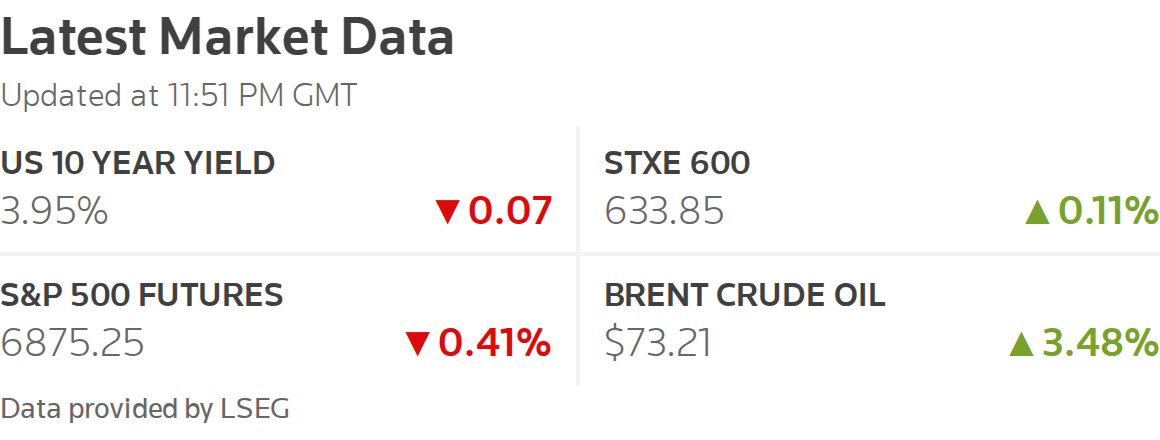
In early trade, the pan-region Euro Stoxx 50 futures rose 0.16%, German DAX futures edged up 0.06%, while FTSE futures eased 0.25%. U.S. stock futures, the S&P 500 e-minis, were flat.








No comments:
Post a Comment