By Ira Dugal, Editor Financial News, with global Reuters staff
|
|
|
Once again, India's vast army of mom-and-pop investors is punching above its weight. While foreign funds rushed for the exits in March and shares in Asia's third-biggest economy logged their steepest monthly fall in six years, retail clients doubled down on their bets.
Are they spotting value early, or missing risks that foreign funds see? Write to me with your views at ira.dugal@thomsonreuters.com.
And, the Reserve Bank of India puts banks under its radar for acting against the interests of the country's forex markets. Scroll down for more on that.
|
|
|
Correction viewed as a buying opportunity |
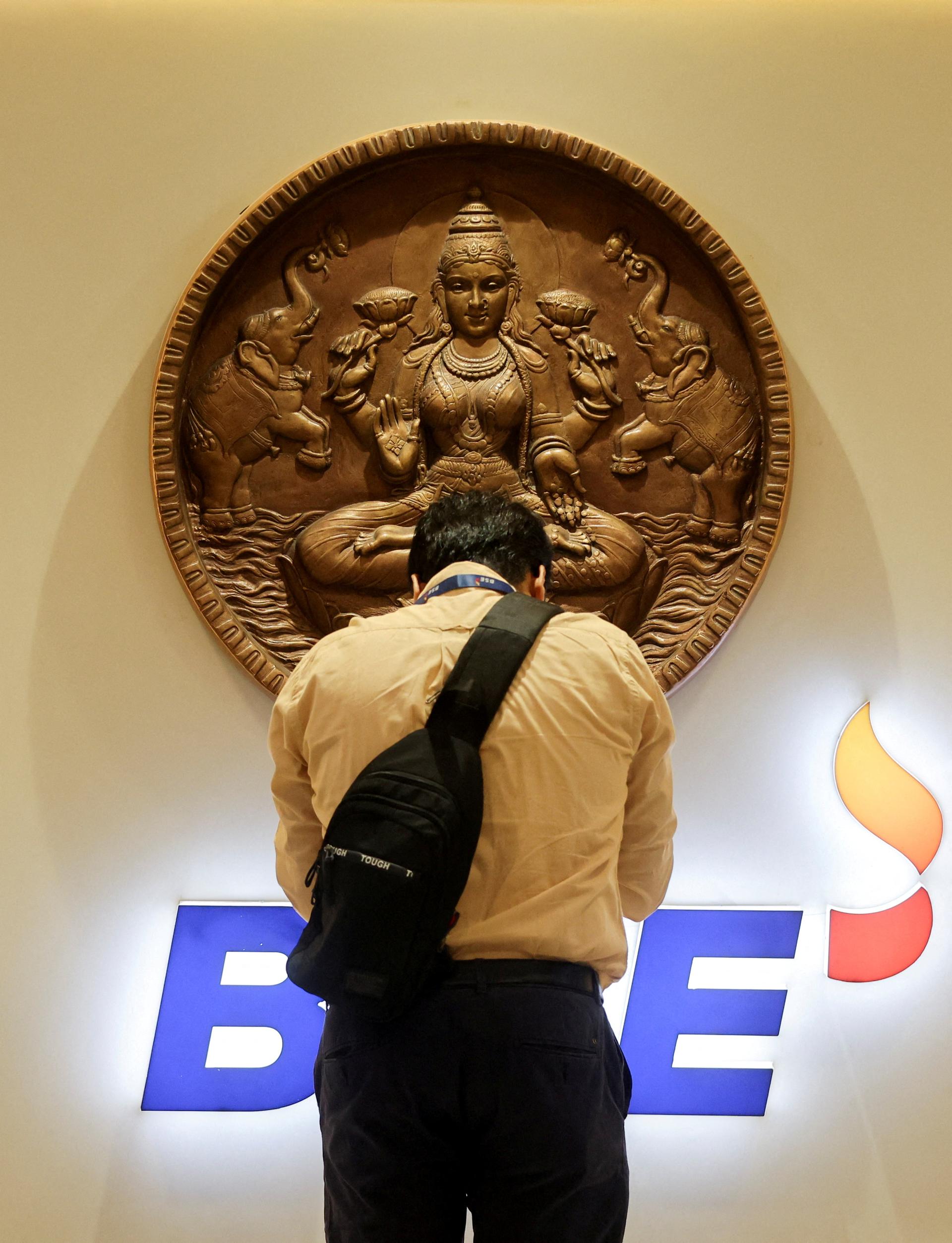
A man prays in front of a wall sculpture of Hindu goddess Lakshmi at the Bombay Stock Exchange in Mumbai, India, February 1, 2026. REUTERS/Francis Mascarenhas/File Photo
|
In the central Indian town of Indore, 24-year-old Yash Raj Verma rubbed his hands in glee when markets took another dive in March as missiles flew in the Middle East war. "When everyone is selling, you should buy, I have understood that," said the home tutor who increased his monthly investments into stock funds by a quarter to 25,000 rupees ($268.49).
Millions of small-time investors like Verma remained unfazed in March when India's equity benchmark index Nifty 50 fell 11% - the biggest monthly drawdown in six years. By contrast, foreign funds exited at a record pace.
The retail investors, who have pumped in an average of $2 billion a month over the past five years, have become crucial to Indian equity markets and are currently the main shock absorber for stocks as global money pulls back.
With Indian equity indices correcting rapidly since the Iran war began and threatening to magnify last year's underperformance - the worst in decades - analysts are watching closely to see if this class of investor buckles.
Data from the Association of Mutual Funds in India suggests they did not, at least in the month of March.
Equity-oriented mutual funds recorded net inflows of 404.5 billion rupees in March 2026, up from 259.78 billion rupees in February. Inflows through monthly contribution plans like the one that Verma subscribes to, known as Systematic Investment Plans (SIPs), rose over 7% to a record 321 billion rupees.
While one-off factors like financial year-end contributions for tax saving may have helped, analysts said that investors used the fall in the market to bottom-fish.
Tarun Surana, a Mumbai-based independent distributor of mutual funds, said most of his clients had chosen to top up monthly investment plans during March's fall in equity markets.
"The correction appears to have been viewed as a buying opportunity rather than a trigger for risk aversion, leading to a meaningful pickup in equity inflows during the month," said Himanshu Srivastava, analyst at Morningstar Investment Research India.
|
|
|
Pressure on company earnings |
The Iran war, now into its second month, has impacted sectors ranging from ceramics to glass manufacturing and restaurants, which have already seen business curtailed. Sentiment indicators like the HSBC India Purchasing Managers' index have also declined.
Foreign investors expect that weakened growth will weigh on earnings of Indian firms, leaving equity indices looking overvalued despite the decline in prices.
Citing these concerns, Goldman Sachs downgraded India to 'market weight' from 'overweight' in a note dated March 26.
The negative sentiment has been reflected in flows, with foreign investors selling nearly $18 billion in Indian stocks in March and so far in April.
Domestic investors, though, see it differently.
The Nifty 50 typically trades at a 50% price-to-earnings premium to the MSCI Emerging Markets Index, Edelweiss Mutual Fund said in an April report, but that gap has now halved, pointing to a favourable medium-term outlook for Indian equities.
"We have seen many cycles and the market always comes back," said Lokesh Tiwari, a 43-year-old Abu Dhabi-based finance professional who typically invests 100,000 to 200,000 rupees a month in Indian equities but bought funds worth nearly 12 times that last month by repatriating his overseas money.
"Every time a correction happens, I look for opportunities," he said.
|
|
|
India's central bank is looking into the unwinding of rupee arbitrage trades by banks after a recent order asking them to cut positions.
Banks offloaded a chunk of these positions to corporates, who are not allowed to take arbitrage bets, drawing the Reserve Bank of India's scrutiny.
The RBI is also likely to push ahead with a plan to ask lenders to report all offshore trades involving the Indian rupee, after a ballooning of arbitrage was seen to accelerate depreciation of the South Asian currency.
Read that Reuters Exclusive here.
|
|
|
The northern state of Haryana, home to the auto hub of Manesar, raised the minimum wage by 35% after factory workers protested the rising living costs as a result of the U.S.-Israeli war on Iran.
While retail prices of petrol and diesel have not been raised in India, cooking gas costs have risen.
Protests were also seen in nearby Noida, which also houses thousands of industrial units.
Higher wage costs will hurt Indian auto firms such as Tata Motors and Mahindra, and push up prices in an economy where inflation is currently modest.
|
|
|
|
A portrait of Indian singer Asha Bhosle, who died at 92, at her residence in Mumbai, India, April 13, 2026. REUTERS/Francis Mascarenhas
|
Iconic Indian singer Asha Bhosle died at the age of 92 in Mumbai on Sunday, drawing widespread tributes.
Bhosle, known for her high-energy music, began her career at the age of 10 and went on to become a constant voice behind Bollywood songs for over eight decades.
Her talent will outlive many, actor Shah Rukh Khan wrote on X.
|
|
|
This newsletter was edited by Muralikumar Anantharaman, Editor, Global News Desk, in Singapore.
|
|
|
|
|
| |
|
|
Reuters India File is sent once a week. Think your friend or colleague should know about us? Forward this newsletter to them. They can also sign up here. Want to stop receiving this email? Unsubscribe here. To manage which newsletters you're signed up for, click here. This email includes limited tracking for Reuters to understand whether you’ve engaged with its contents. For more information on how we process your personal information and your rights, please see our Privacy Statement. Terms & Conditions |
|
| |
© 2026 Thomson Reuters. All rights reserved.
3 Times Square, New York, NY 10036 |
|
|
|
|
|







No comments:
Post a Comment