A look at the day ahead in European and global markets |
|
|
By Wayne Cole, Chief Correspondent, Treasury |
|
|
It's been a sea of red in Asian stock markets as Brent cleared $115 right from the off. It's now up roughly 59% in March, which would be the biggest month on record. Bigger even than when Iraq invaded Kuwait in 1990. The headlines have not been helpful, with Pakistan trying to host peace talks but would-be U.S. and Iranian guests seemingly reluctant to RSVP. Attacks have continued across the Gulf and widened to the south as Yemen's Houthis launched strikes on Israel. |
|
|
Houthis add new layer of risk |
Luojiashan tanker sits anchored in Muscat, as Iran vows to close the Strait of Hormuz, amid the U.S.-Israeli conflict with Iran, in Muscat, Oman, March 7, 2026. REUTERS/Benoit Tessier/File Photo |
That was a worrying development as the Houthis could try to restrict shipping through the Bab el-Mandeb in the Red Sea, which is the other major choke point in the Middle East oil trade alongside the Strait of Hormuz. As for the Strait, President Trump told the Financial Times that Iran had agreed to let through another 20 "big boats", presumably tankers, as a concession. That would also seem to be a tacit recognition that Iran controls the Strait. Then again, Trump also said he wants to "take the oil in Iran" and might use U.S. forces to seize Kharg Island in the Gulf, Iran's main oil exporting terminal. He went on to say that talks with Iran were going on directly and indirectly, were going extremely well and could reach a deal soon, or might not. |
Graphics are produced by Reuters |
|
|
Risks lean towards war escalation |
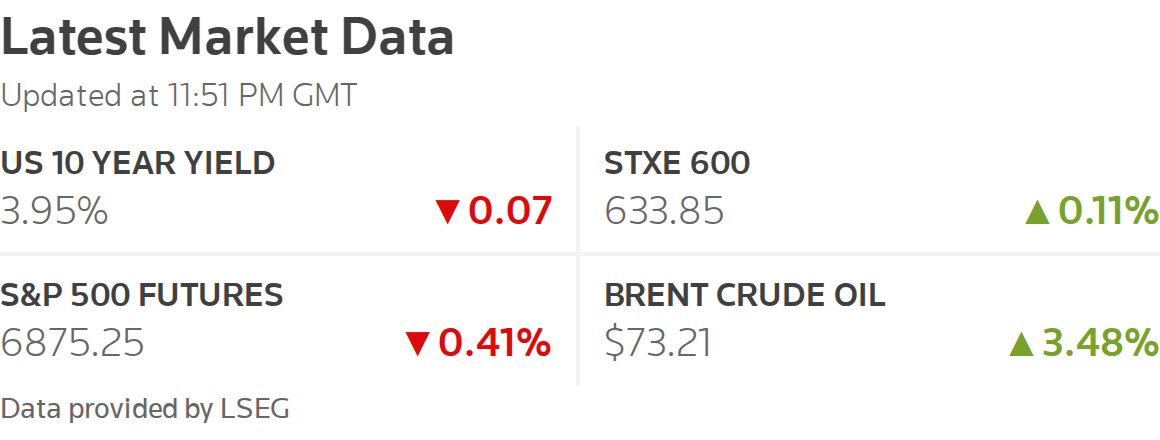
Meanwhile, the U.S. build-up goes on, with various reports that more than 50,000 troops are in the region including more special forces. All of which suggests the conflict could run for some time yet and the risks lean toward escalation, dealing more damage down the supply chain and lengthening the time for it to return to anything like normal once, if, the Strait re-opens. That is one reason why Brent futures are above $100 out to July, and December is up at $85 a barrel. That's bad news for inflation and will show up starkly in March German preliminary CPI due later Monday, and EU CPI on Tuesday. The hawks at the ECB are already clawing for a rate hike, and markets imply a 58% chance of an April move. Futures have given up on a Fed easing this year, which Fed Chair Powell may have something to say about at a Harvard event later today. It will also be front of mind for Kevin Warsh, the proposed replacement for Powell, with the Senate Banking Committee planning to hold a hearing on Warsh's nomination as soon as the week of April 13. |
|
|
Key developments that could influence markets on Tuesday: |
- German preliminary CPI for March
- EU economic confidence for March
- Dallas Fed March survey
- Federal Reserve Board Chair Jerome Powell participates in a moderated discussion. Fed Bank of New York President John Williams in conversation
- G7 finance and energy ministers, as well as central bankers, will meet virtually
|
|
|
Opinions expressed are those of the author. They do not reflect the views of Reuters News, which, under the Trust Principles, is committed to integrity, independence, and freedom from bias. |
|
|
| | | | | Morning Bid is sent every weekday morning. Think your friend or colleague should know about us? Forward this newsletter to them. They can also sign up here. Want to stop receiving this email? Unsubscribe here. To manage which newsletters you're signed up for, click here. This email includes limited tracking for Reuters to understand whether you’ve engaged with its contents. For more information on how we process your personal information and your rights, please see our Privacy Statement. Terms & Conditions | | | | | © 2026 Thomson Reuters. All rights reserved.
3 Times Square, New York, NY 10036 | | | |
|
|
|








No comments:
Post a Comment