By Ira Dugal, Editor Financial News, with global Reuters staff |
|
|
Air travel in India was crippled in an unprecedented way last week as IndiGo, Asia's most valued airline by market capitalisation, struggled to adapt to new rules aimed at reducing pilot fatigue and ended up cancelling 2000 of its flights. Is the country's aviation sector failing to keep pace with the growing demand for flying? That's our focus this week. Share your views on what airlines can do to better manage a surge in passenger travel by clicking here. And, Prime Minister Narendra Modi's government finds itself in the middle of an uproar as two separate proposals raise privacy concerns. Scroll down for more on that. India File will take a year-end break starting next week and return on January 6. Happy holidays! |
|
|
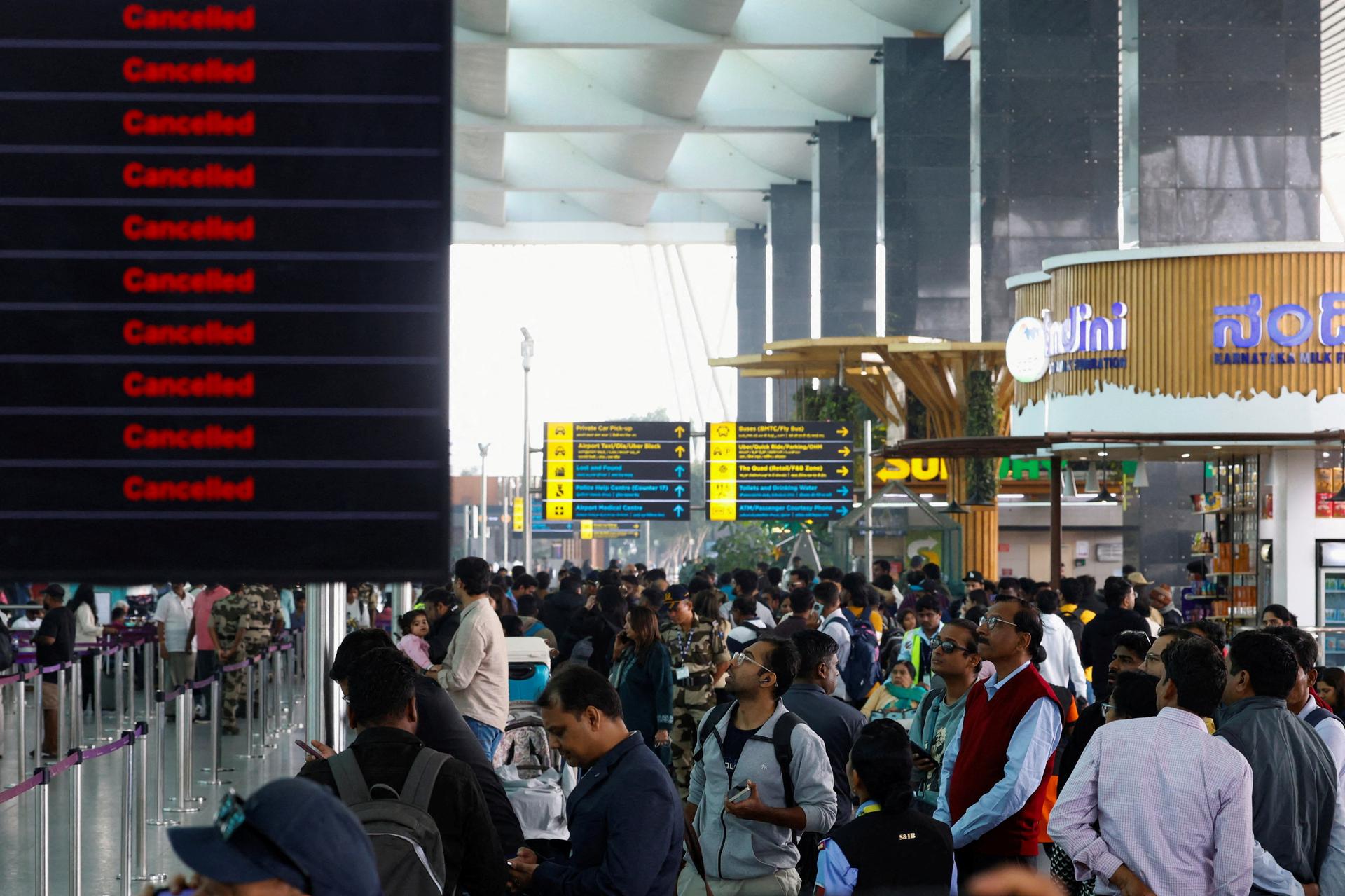
Travellers look at updates on flights, as they stand next to a screen displaying details of cancelled IndiGo airlines flights, at Kempegowda International Airport in Bengaluru, India, December 6, 2025. REUTERS/Priyanshu Singh |
Flights cancelled. Passengers stranded. Meetings and weddings missed. Those were some of the scenes at Indian airports across New Delhi, Mumbai, Bengaluru and Chennai in recent days, as the country's largest airline IndiGo, controlling two-thirds of the market, struggled to reorganise operations after new rules for pilot flying kicked in last month. The chaos at IndiGo and the resultant air travel disruption, while worse than anything that India has seen so far, was only the latest witnessed as aviation infrastructure fails to keep pace with demand for flights. It followed new government rules to combat pilot fatigue. The rules, which increased the minimum weekly rest period for pilots and put stricter curbs on night duties, kicked in on July 1 and November 1, complicating roster management. Read here for more on the new Flight Duty Time Limitations (FDTL). "IndiGo has been hit hardest by new FDTL rules, which cut pilot duty hours and raised crew needs, testing its lean, high-utilisation model. The rule change coincided with capacity expansion, tech issues and congestion, triggering cascading disruptions," brokerage Jefferies said in a note over the weekend. The world over, concerns about pilot fatigue have dogged the industry, with authorities introducing rules to balance commercial objectives of airlines and the health of employees. Read this Reuters Insight on the mental health struggles that pilots often hide to keep flying. But the need to improve the well-being of pilots is at odds with pilot shortages that have affected Indian airlines for years now. This deficit had also prompted India to push countries for a new global code of conduct to prevent poaching of airline staff, a move opposed by unions. |
|
|
India is one of the world's fastest-growing aviation markets and domestic passenger traffic is expected to double to 300 million by 2030, according to government data from 2024. Over this period, Indian airlines will need to spend $150 billion to finance aircraft orders and the number of pilots will have to double to over 20,000 to meet the demand, separate estimates from S&P Global and the Centre for Asia Pacific Aviation show. But the sector is increasingly dominated by two airlines: IndiGo and Air India. The crisis at IndiGo brought home the risks of that duopoly. As the travel disruption spiraled, India's aviation regulator was forced to suspend two of its new pilot-fatigue rules to help airlines stabilise operations. A fare cap had to be imposed as prices of air tickets soared. The crisis has exposed Indian aviation's too-big-to-fail risk, Reuters' Abhijith Ganapavaram writes in this analysis. While IndiGo may face tougher scrutiny, the government may not have the option to curtail its capacity expansion amid growing demands of the Indian economy given its dominant position in the industry, Mumbai-based brokerage JM Financial said in a note. Shares of Interglobe Aviation, which operates IndiGo, have fallen 16% over the past week as the crisis unfolded and Moody's Ratings warned the airline's profitability in the current financial year could be negatively impacted. The eventual loser, though, may be the Indian flyers. "Most pressures are industry-wide in nature and in a consolidated market they can be passed through to fares, we believe," Jefferies analysts said in their note. |
|
|
India's central bank cut its key policy rate at its final rate-setting meeting of the year, with Governor Sanjay Malhotra saying a "rare Goldilocks" phase for the economy allows space for policy easing. "We expect the policy rates to be low as inflation stays benign," Malhotra said. The central bank also announced a $16 billion liquidity boost to help keep a lid on borrowing rates in the economy. The rate cut came despite the Indian rupee trading near record lows. The central bank will tolerate a weaker currency amid weaker foreign flows, Reuters reported. On the sidelines of the monetary policy review, Malhotra said the country will comfortably meet external financing requirements. |
|
|
The Indian government is considering a proposal to force smartphone firms to enable satellite location tracking that is always activated for better surveillance, Reuters' Aditya Kalra and Munsif Vengattil reported. Apple, Google and Samsung have opposed the proposal. Read that exclusive report here. The news broke days after Modi's government asked smartphone makers to preload a state-run safety app, leading to a push-back from activists and opposition political parties. The order was later rescinded. |
|
|
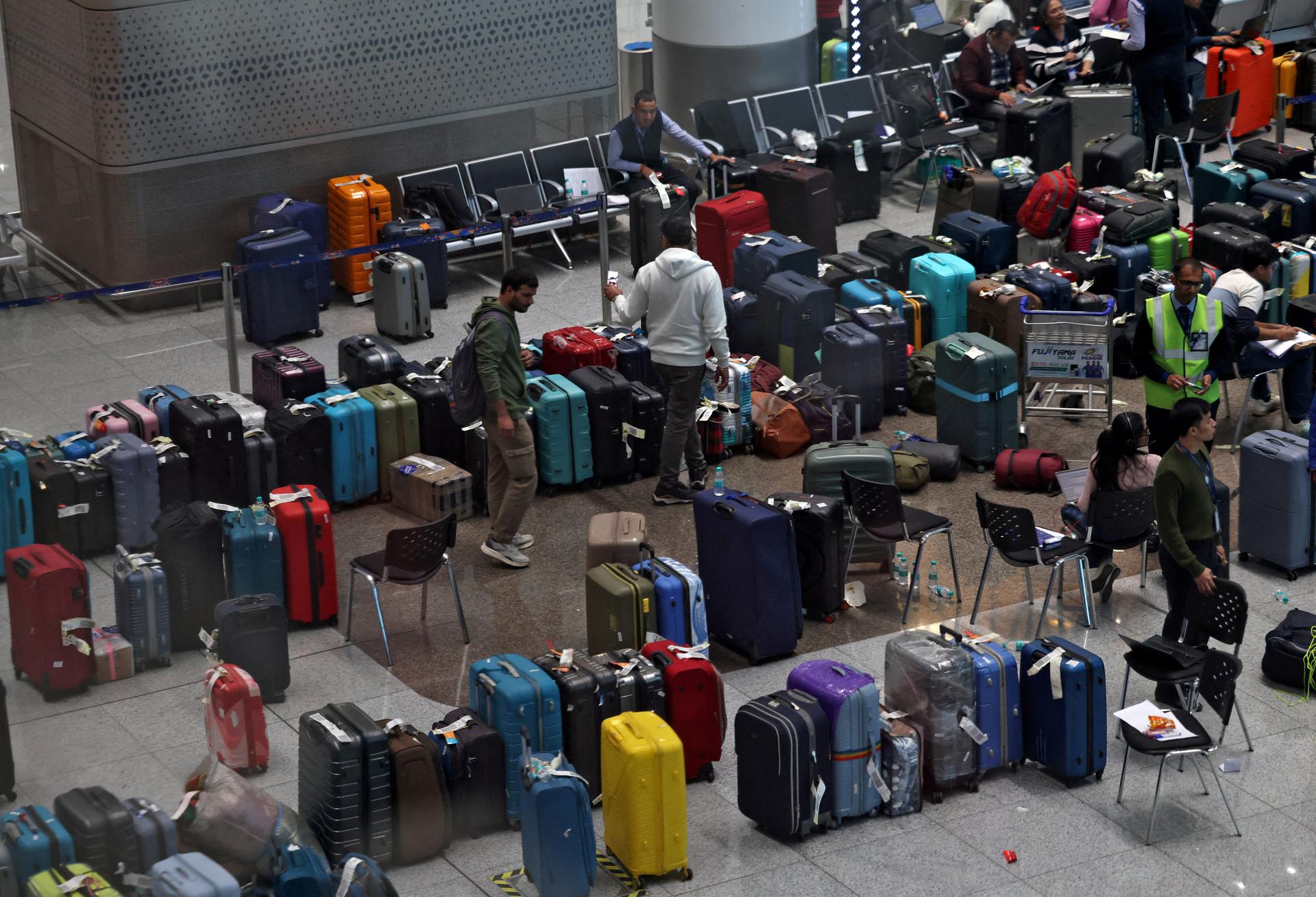
Staff members of IndiGo tag stranded bags and belongings of IndiGo passengers following large-scale flight disruptions, at Terminal 1 of Indira Gandhi International Airport in New Delhi, India, December 8, 2025. REUTERS/Bhawika Chhabra |
IndiGo is battling growing passenger fury over delays in finding and delivering thousands of stranded bags, with social media flooded with photos of luggage piling up at airports after its large-scale flight disruptions last week. Given last-minute cancellations and the multiple connecting flights used to reroute passengers, thousands of suitcases and bags have been misplaced. |
|
|
This newsletter was edited by Muralikumar Anantharaman, Editor, Global News Desk, in Singapore. |
Reuters India File is sent once a week. Think your friend or colleague should know about us? Forward this newsletter to them. They can also sign up here. Want to stop receiving this newsletter? Unsubscribe here. To manage which newsletters you're signed up for, click here. This email includes limited tracking for Reuters to understand whether you've engaged with its contents. For more information on how we process your personal information and your rights, please see our Privacy Statement. Terms & Conditions |
|
|
|






No comments:
Post a Comment