A look at the day ahead in European and global markets
|
|
|
|
By Wayne Cole, Chief Correspondent, Treasury
|
|
|
|
|
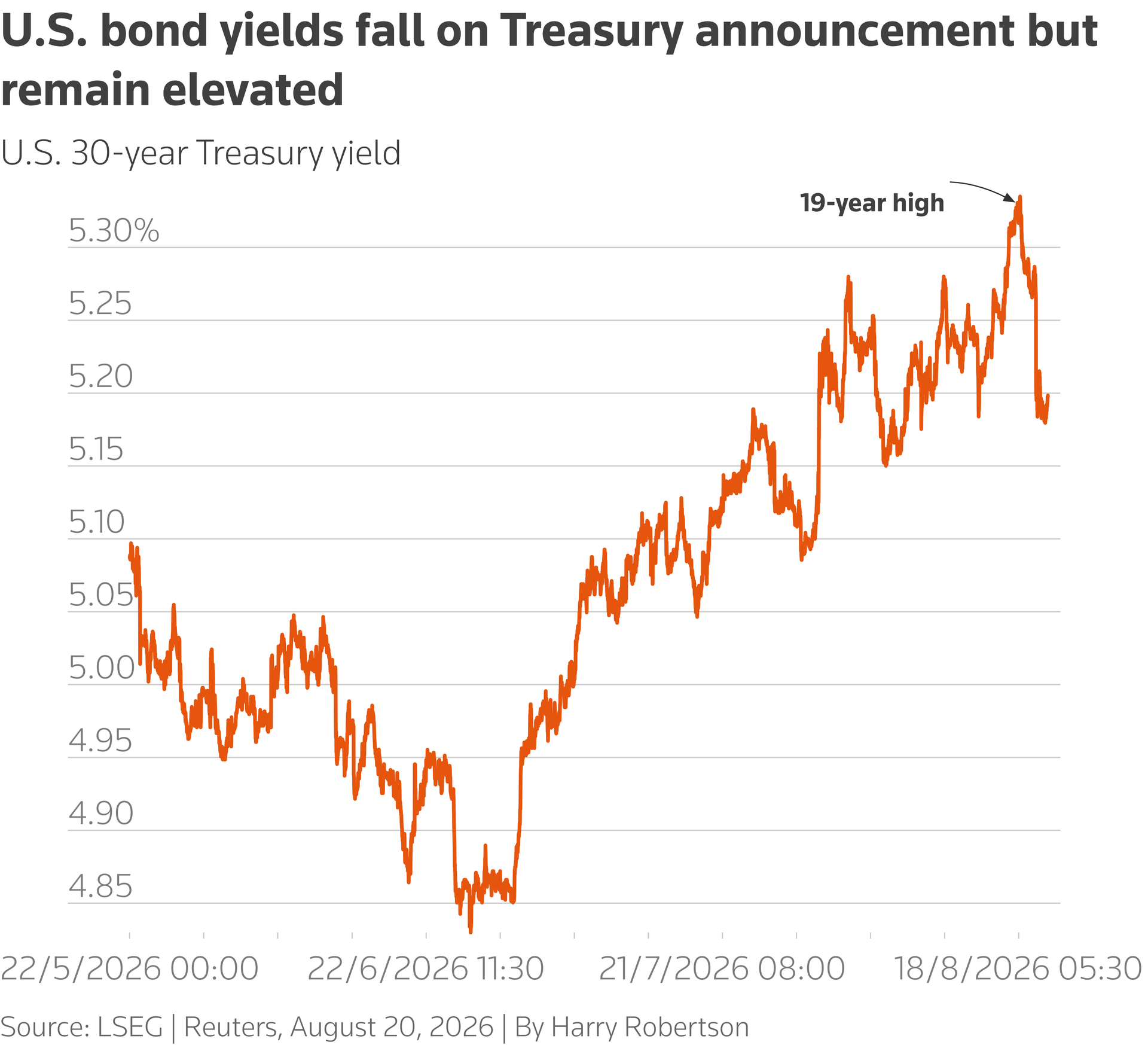
So, it took only a day for the "Bessent Bid" to turn into a sell signal. Thirty-year yields have backed up to 5.25% and are almost where they were before Treasury Secretary Scott Bessent intervened in the free market with an offer to buy more long-dated government debt.
Stung, perhaps, by the market's lack of respect, Bessent doubled down by telling CNBC the Treasury could buy more than $4 billion a time if needed, and floated the idea of a fiscal consolidation plan led by President Donald Trump.
|
|
|
|
More US borrowing to fund debt-buying |
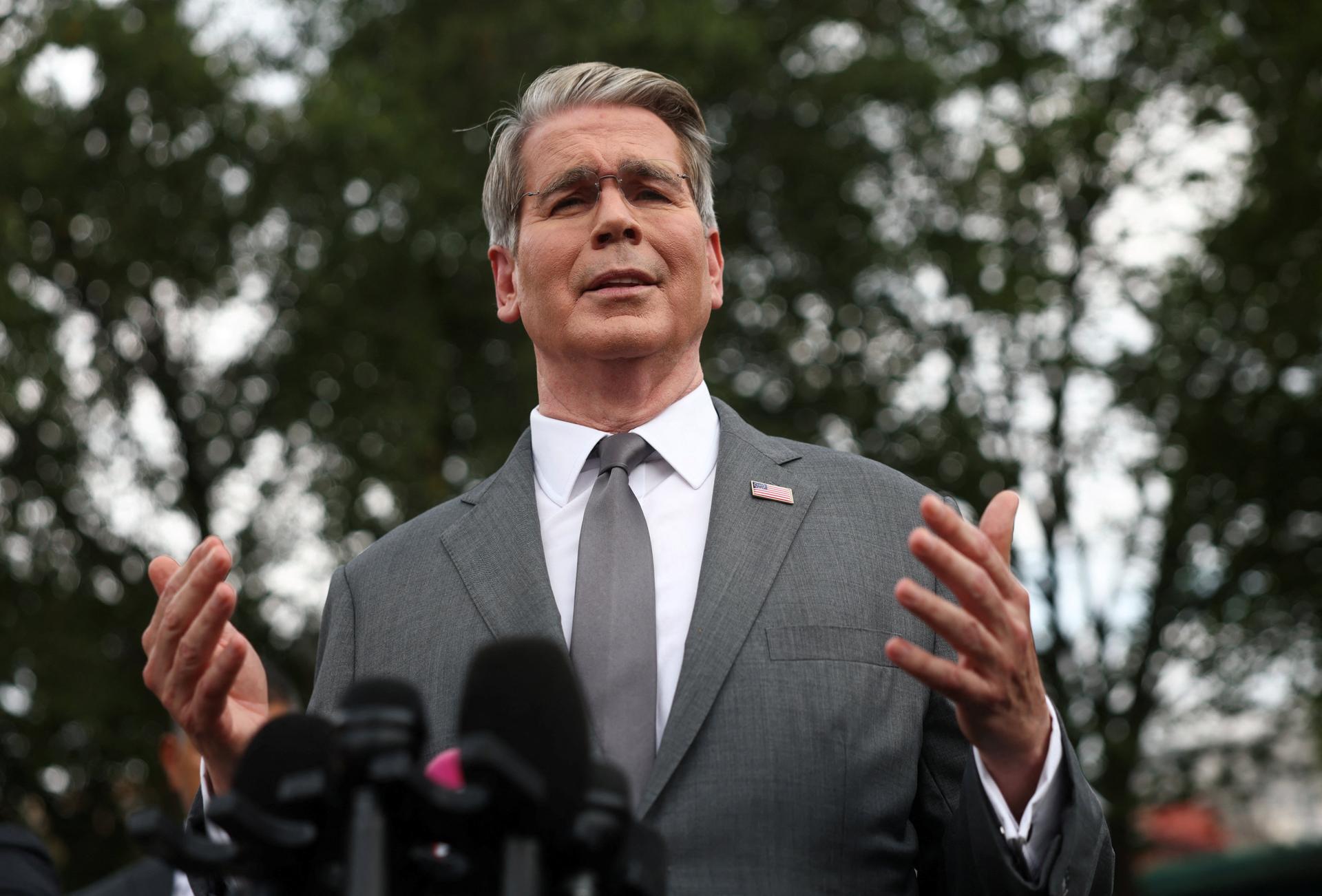
U.S. Treasury Secretary Scott Bessent speaks to reporters at the White House in Washington, D.C., U.S., August 20, 2026. REUTERS/Kevin Lamarque
|
Analysts noted the $4 billion target would amount to around $14 billion of extra bonds bought in a quarter, a drop in the Treasury market's $32 trillion ocean. It would also have to be funded by more borrowing, presumably at the short end, and likely at higher yields than the debt being bought.
The promise of fiscal consolidation might sound more credible if the budget deficit was not running above 6% of GDP, with $1.2 trillion alone spent paying the interest bill on $40 trillion of debt.
Higher taxes are anathema to the administration, putting all the onus on cuts in government spending, most of which is walled off in Social Security and Medicare. And all this at a time when the administration is asking Congress for $1.5 trillion for defence, an extra $87 billion to cover war with Iran, and a mere $600 million for a White House ballroom.
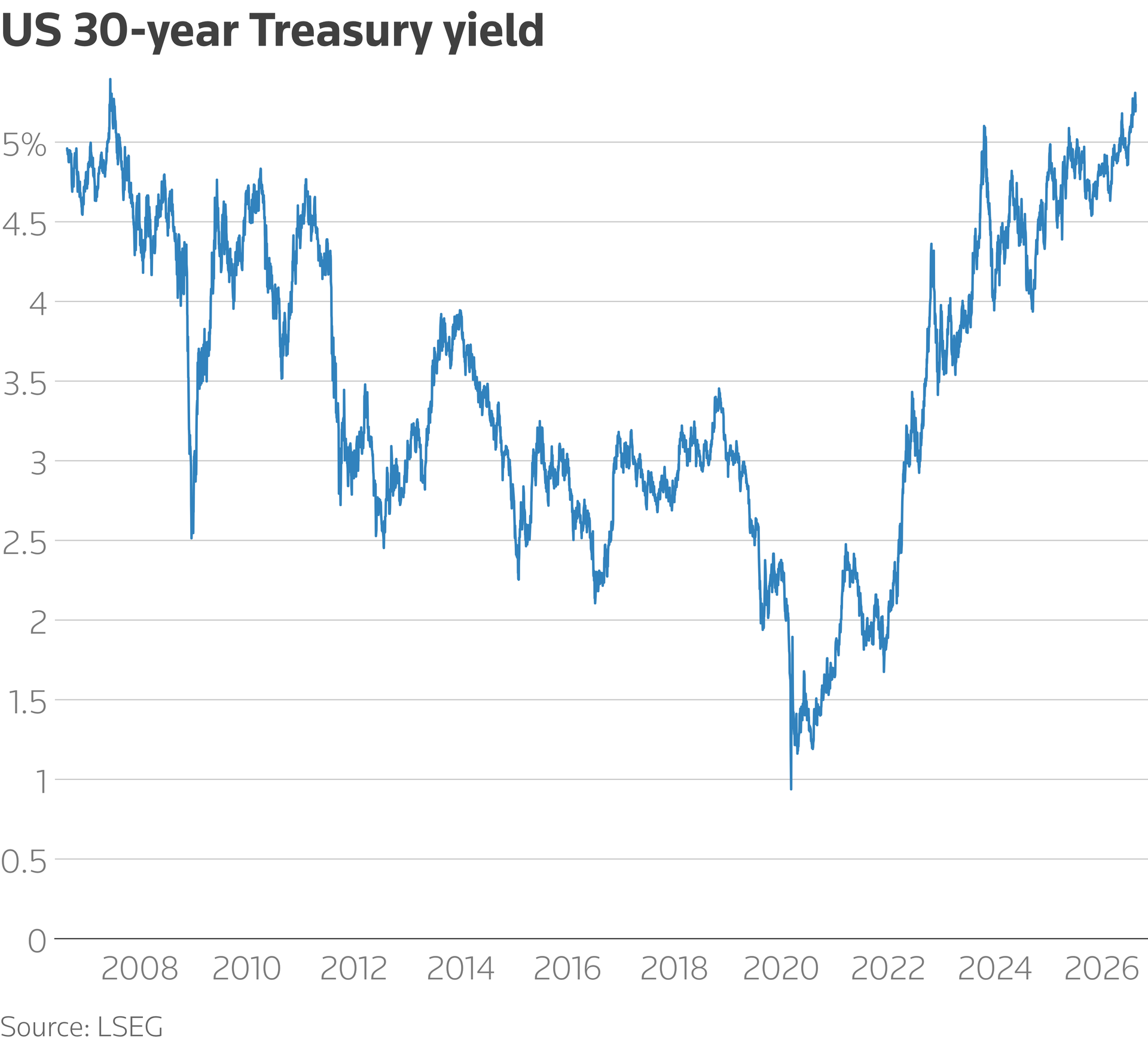
Bessent's appearance on CNBC also made it clear the sudden buy-back plan had little to do with liquidity and was rather aimed at capping yields at levels where they would not dominate media headlines every day. If investors suspect the driving force is domestic politics, not market functioning, another test above 5.30% would seem inevitable.
|
Graphics are produced by Reuters
|
|
|
|
US economic warfare against Iran |
The treasury secretary was also in the news expanding on Trump's pledge of economic warfare against Iran, saying the U.S. would impose "the toughest sanctions in history" on the country. He has lined up a media conference on Monday to announce the steps, which has further dimmed any hopes for a peace deal that would fully open the vital Strait of Hormuz.
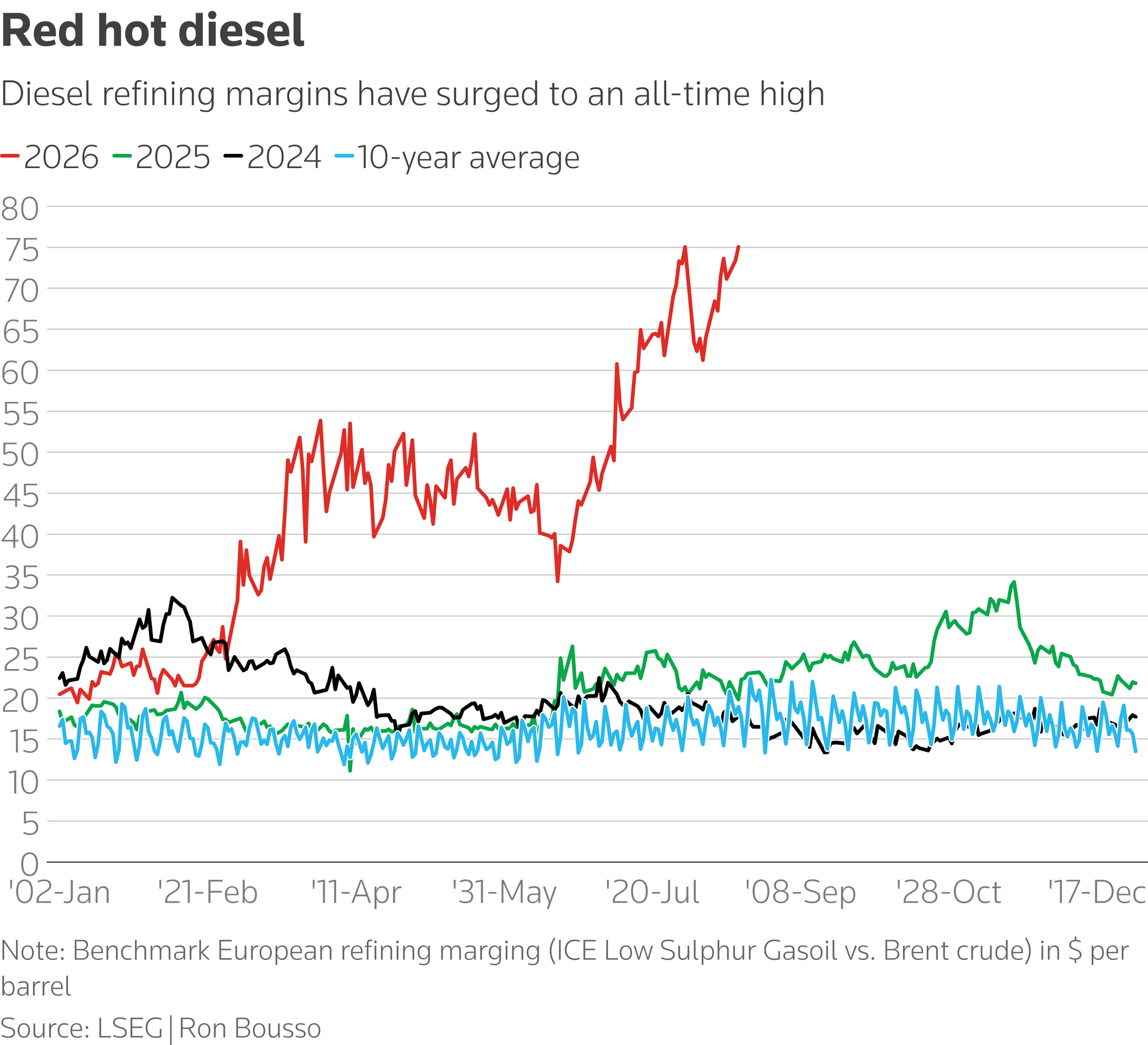
That saw Brent reach a one-month top of $94.71, before steadying around $93.80. Analysts are also increasingly saying that a shortage of refinery output is pushing up the price of diesel - or the crack spread - and that's the fuel that matters to business, trucking, construction, mining and farming.
Add in the impact of El Niño on food prices and AI capex costs on tech gear, and it could get harder for central banks to "look through" this particular inflation shock.
|
Graphics are produced by Reuters
|
|
|
|
Key developments that could influence markets on Friday: |
- Flash August PMIs for US, UK and EU
- UK retail sales for July, Canadian retail sales for June
|
|
|
|
Opinions expressed are those of the author. They do not reflect the views of Reuters News, which, under the Trust Principles, is committed to integrity, independence, and freedom from bias.
|
|
|
|
|
|
| |
|
|
Morning Bid is sent every weekday morning. Think your friend or colleague should know about us? Forward this newsletter to them. They can also sign up here. Want to stop receiving this email? Unsubscribe here. To manage which newsletters you're signed up for, click here. This email includes limited tracking for Reuters to understand whether you’ve engaged with its contents. For more information on how we process your personal information and your rights, please see our Privacy Statement. Terms & Conditions |
|
| |
© 2026 Thomson Reuters. All rights reserved.
3 Times Square, New York, NY 10036 |
|
|
|
|
|