By Blaine Rodrigues, Editor Online Production, with Reuters global staff
|
|
|
|
Indian shares snapped a two-month losing streak in October but benchmark indices are still down about 10% this year, and the Nifty is on course for one of its worst annual performances in more than a decade.
So where are India's 130 million retail investors choosing to put their money? That's the focus of this week's India File. You can write to me with your thoughts at blaine.rodrigues@thomsonreuters.com.
Scroll down for more on Sunday's protests in New Delhi, as well as the court clash between the Indian government and Volkswagen over a record $1.2 billion tax dispute. All that and more in our Must Reads.
The India File newsletter will take a break next week for Diwali and return on November 17.
|
|
|
Far and wide: Where retail money is going |
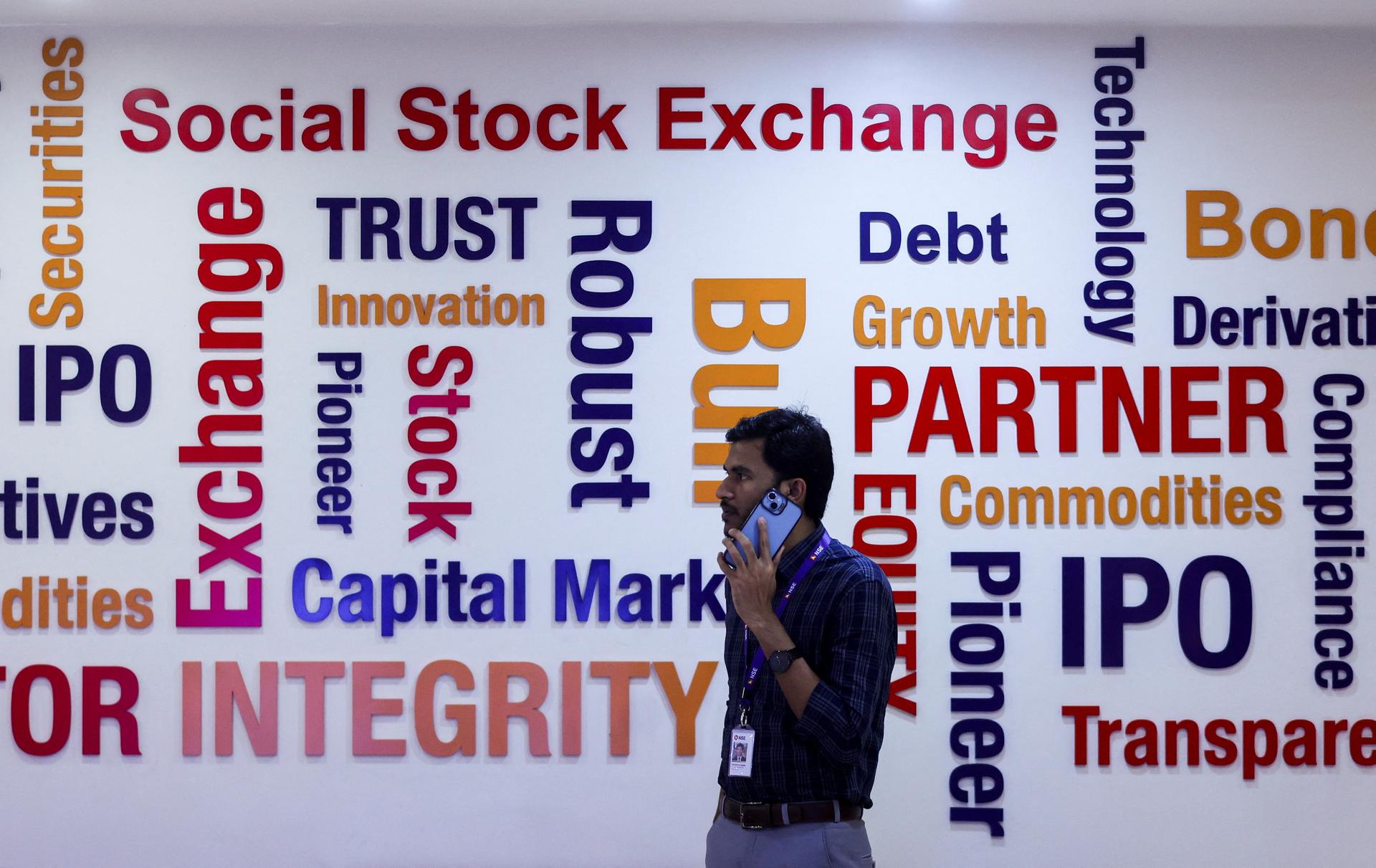
A man speaks on a phone inside the National Stock Exchange (NSE) in Mumbai, India, September 17, 2025. REUTERS/Francis Mascarenhas
|
India's retail investor is adapting.
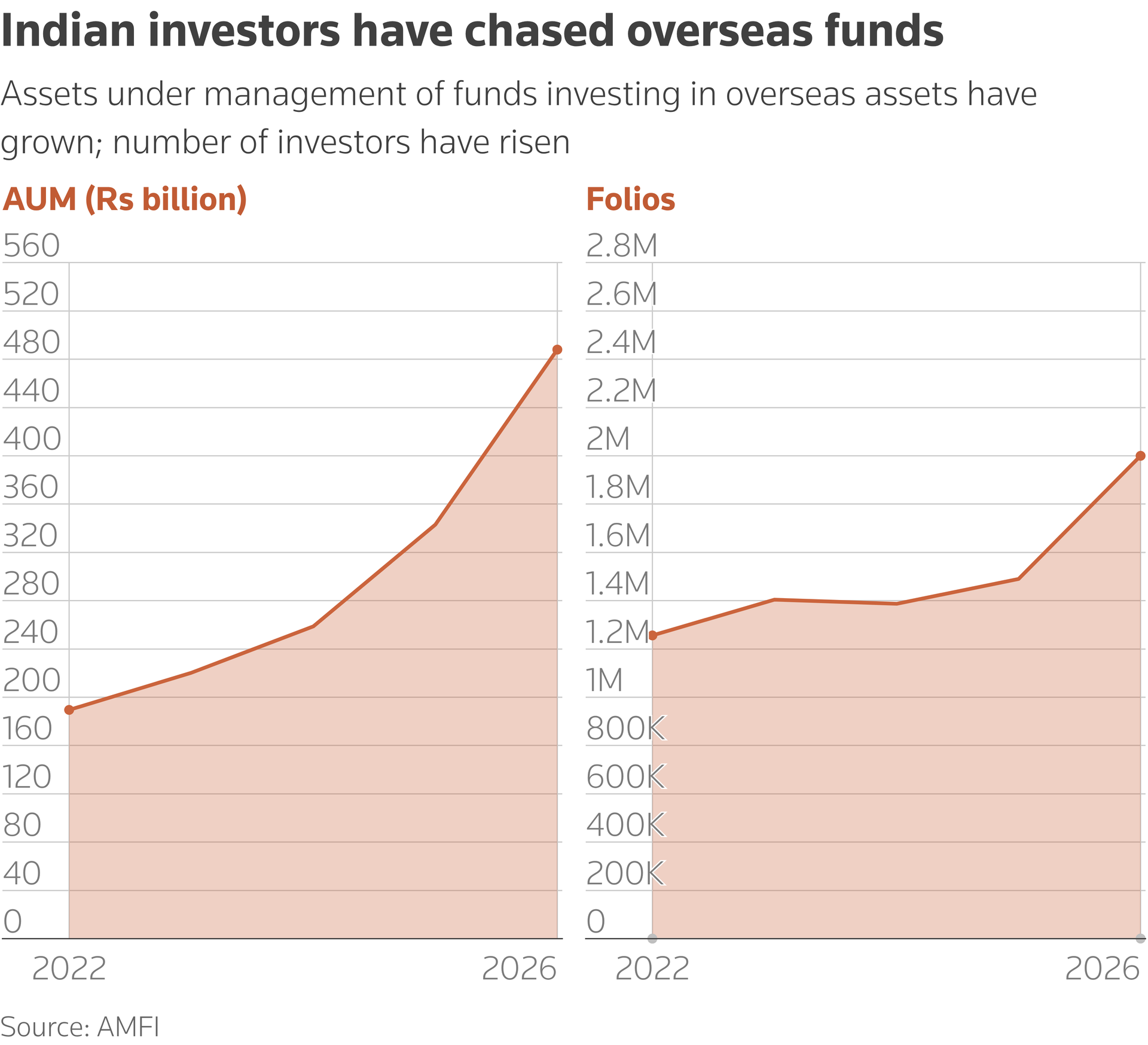
After piling into domestic equities in the years after the COVID-19 pandemic, investors are now looking further afield in their hunt for better returns.
Many are seeking to tap into the AI investment boom through stocks in the US or South Korea, or strike it big in frontier markets such as Kazakhstan and Mongolia.
You can read more on that in this analysis by my colleagues Jayshree P Upadhyay and Dharamraj Dhutia.
Online investment platforms have made investing in overseas markets far easier, and several have launched funds and fractional investing options via India's GIFT City - a tax neutral hub that has less stringent rules on overseas investing.
In the first half of 2026, international investments by individuals in India, made directly or through funds, were on track to surpass 2025’s full year record.
"It has become very easy to start investing in international markets and for people chasing opportunity abroad it has become easier," said Sunny Agrawal, head of the fundamental equity research team at SBICAPS Securities.
|
|
|
|
But Agrawal thinks the tide is about to turn, with interest likely to move back home.
"I feel now on a relative basis India is better placed. If Indian equities start delivering better performance I think automatically the money will start moving back to India," he said.
That hope is reflected in the fact that monthly subscriptions into mutual funds remain robust despite the underperformance of the Indian markets.
The Association of Mutual Funds in India (AMFI), in September noted that Systematic Investment Plans (SIPs) - a method of investing a fixed amount of money regularly - amounted to a record 324 billion rupees ($3.42 billion), surpassing the record set in August. Active SIP accounts also rose to 100.6 million.
And Indian equities could be in line for a further boost.
SEBI has recommended the government scrap the long-term capital gains tax in a bid to lure back foreign investors. Jayshree P Upadhyay has the details in this exclusive report. The proposals also include changes to mutual funds that could benefit Indian retail investors.
Indian stocks could be poised for a recovery in the remainder of the financial year according to this report by Bharath Rajeswaran.
Resilient earnings, and IT stocks helped Indian shares snap their two-month losing streak in October. Brokerages predict a November rebound with the now familiar caveats around AI and crude oil prices.
|
|
|
|
Jio Platforms soared 27% on its Mumbai debut after a record-breaking $3.2 billion IPO. The listing was the first for Mukesh Ambani's Reliance conglomerate in two decades and marks a step forward in his attempt to turn it into an "everything company".
You can read more on the IPO in this report by Vibhuti Sharma and Aditya Kalra.
Strong listing-day demand encouraged retail investors to take on more risk, borrowing $234 million to buy the stock, making it the fourth-largest margin-funded stock in the country. You can read more about that in this report by Vivek Kumar M.
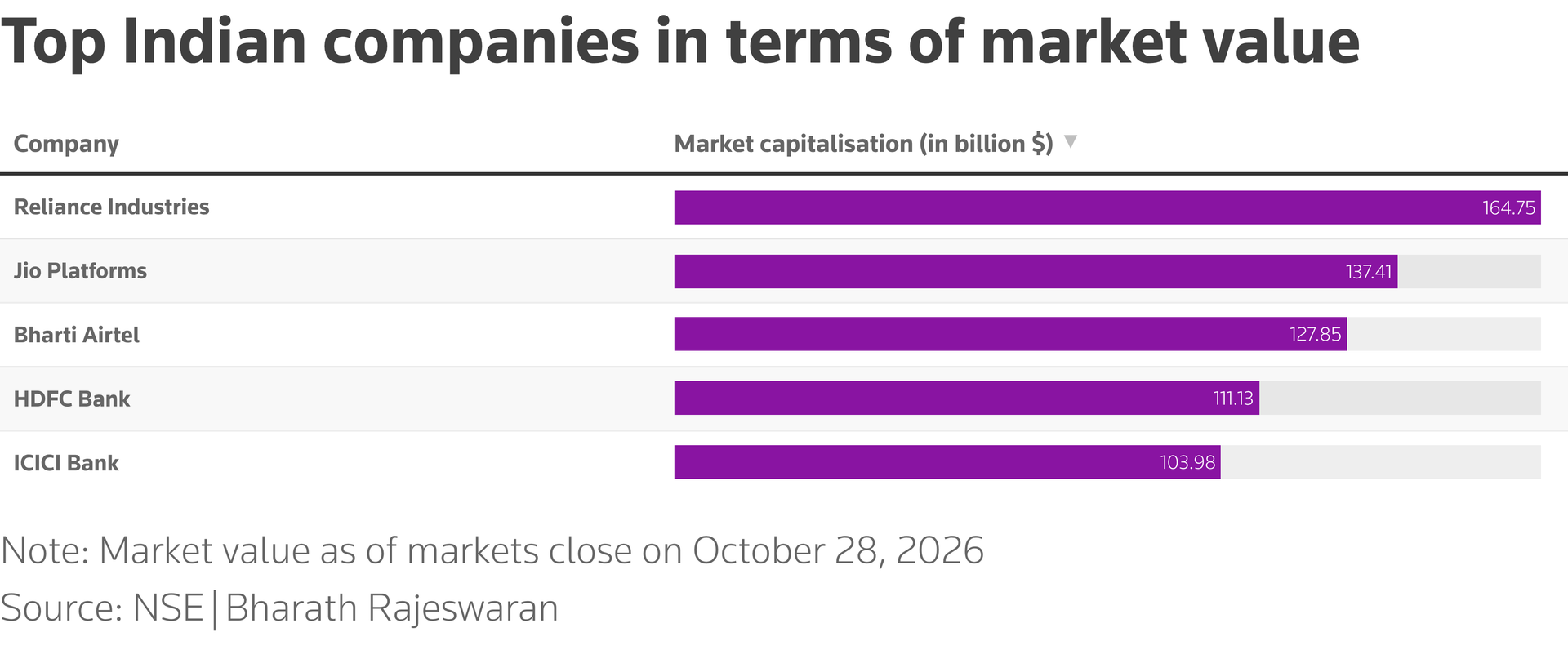
Strong retail and institutional interest in the Jio IPO helped it reach a valuation of $137 billion making it India’s second largest company by market capitalisation. You can also read about the drones and DJs that made the IPO a party for more than just investors.
|
|
|
|
- India defended its record $1.2 billion demand against Volkswagen in court, alleging the German auto giant undervalued imports for years and paid below the full tariff rates. You can read more in this report by Aditi Shah.
- The RBI has warned banks of rising cyberattacks on financial infrastructure. Ashwin Manikandan has this report on what the central bank is seeking from banks in terms of compliance and their preparedness for AI-related risks.
- Nike unveiled its first-ever running shoe designed specifically for India. Danielle Kaye has more on that.
- Sun Pharma was ordered to halt eye-care drug production at its Assam facility after quality lapses were found. Rishika Sadam had that exclusive.
|
|
|
|
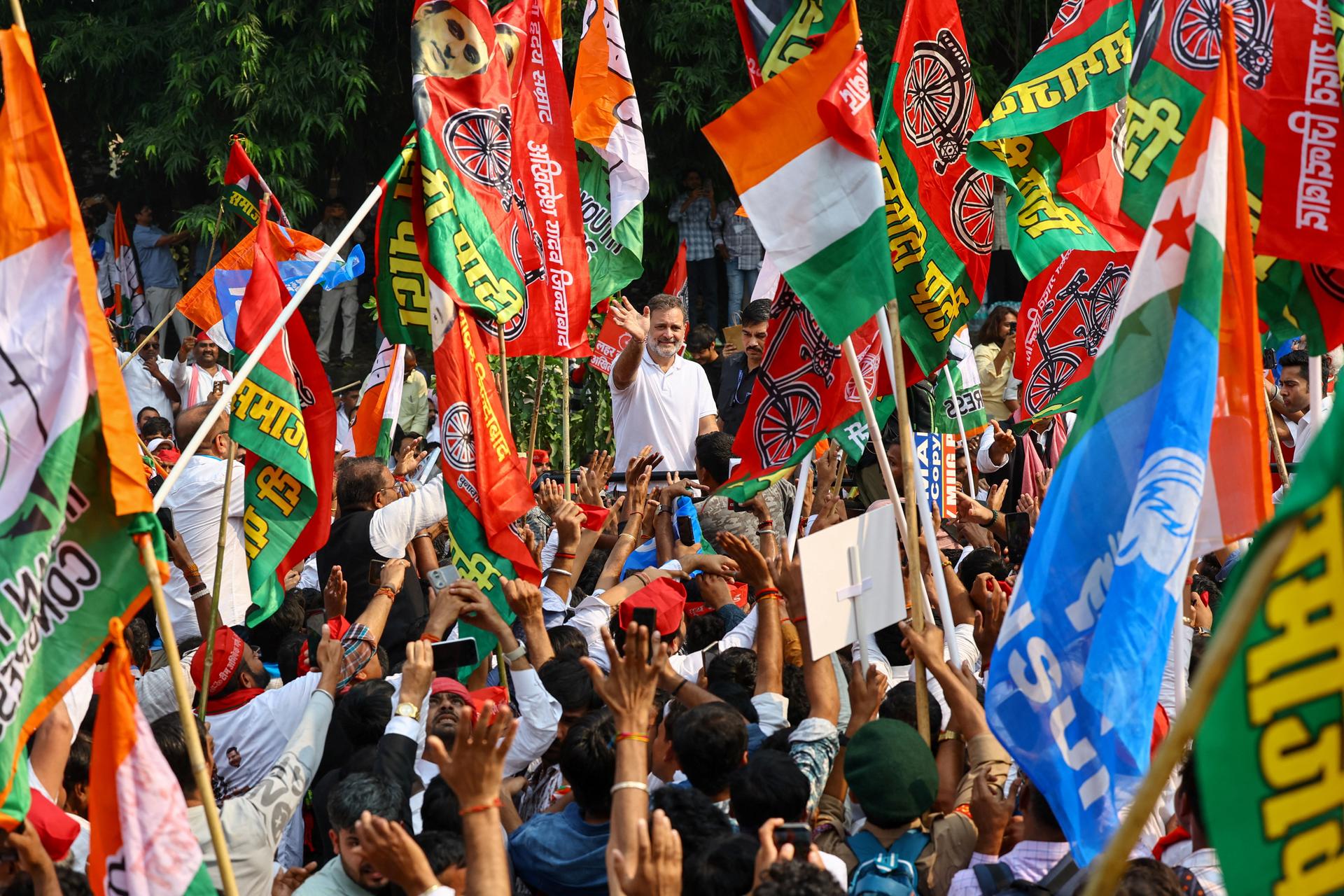
Rahul Gandhi waves to supporters at a "Save Democracy" march towards Ramlila Maidan, in New Delhi, India, November 1, 2026. REUTERS/Anushree Fadnavis
|
Thousands protested in New Delhi on November 1 to demand the resignation of India's election chief over a revision of voter lists, the latest in more than a month of demonstrations challenging Prime Minister Narendra Modi.Saurabh Sharma and Sakshi Dayal report.
|
|
|
|
This newsletter was edited by Kate Mayberry
|
|
|
|
|
| |
|
|
Reuters India File is sent once a week. Think your friend or colleague should know about us? Forward this newsletter to them. They can also sign up here. Want to stop receiving this email? Unsubscribe here. To manage which newsletters you're signed up for, click here. This email includes limited tracking for Reuters to understand whether you’ve engaged with its contents. For more information on how we process your personal information and your rights, please see our Privacy Statement. Terms & Conditions |
|
| |
© 2026 Thomson Reuters. All rights reserved.
3 Times Square, New York, NY 10036 |
|
|
|
|
|






No comments:
Post a Comment