By Ira Dugal, Editor Financial News, with global Reuters staff
|
|
|
|
The annual BRICS summit in New Delhi was a diplomatic win for India, bringing together nations with divergent priorities and agendas. But did it also provide a platform for China to showcase its rising global influence? That's our focus this week.
Share your view on the key takeaways from the September 12 to 13 BRICS summit with me at ira.dugal@thomsonreuters.com.
And a further rise in inflation in August and a renewed surge in global oil prices clinch the case for India's first rate hike in nearly four years. Scroll down for more on that.
|
|
|
Photo ops, songs and a promise of cooperation |
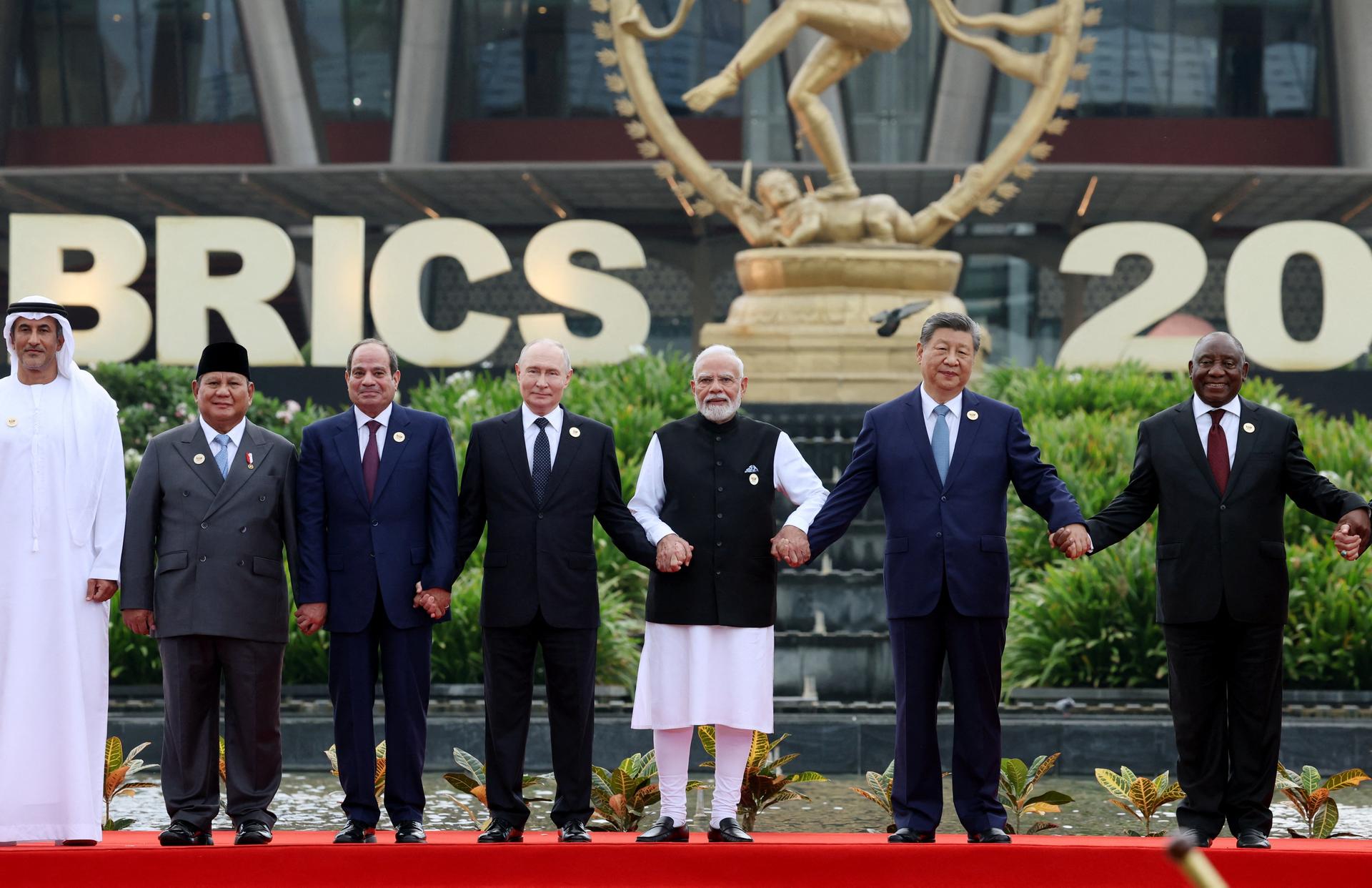
Leaders pose for a family photo during the BRICS summit in New Delhi, India, September 12, 2026. Sputnik/Alexander Kazakov/Pool via REUTERS
|
With photo opportunities, songs and a nearly 18,000-word joint communique, the summit of an expanded BRICS grouping appeared, at least on the surface, to be a success.
Chinese President Xi Jinping travelled to India for the first time in seven years, following a border conflict. Xi, Indian Prime Minister Narendra Modi and Russian President Vladimir Putin posed hand-in-hand for pictures. Leaders from Iran and the United Arab Emirates met. And Malaysian Prime Minister Anwar Ibrahim even broke into a Bollywood number.
"The summit provided an opportunity for India to demonstrate its diversified portfolio of partnerships, to reiterate that it can be a voice of the Global South and venue for adversaries to communicate," said Tanvi Madan, senior fellow in the Foreign Policy program at the Brookings Institution.
"But there are tradeoffs involved, including bolstering a platform that enables China’s global influence," said Madan, adding that providing a stage for Iranian President Masoud Pezeshkian and Putin has the potential to upset India’s other partners, which it would need to mitigate.
The summit may have been India's moment, but China's influence was evident in the agenda it advanced.
Xi said China would lead the creation of a BRICS AI Open Source Zone to promote cooperation on large language models. He also proposed a BRICS Special Economic Zone partnership and called for more stable industrial and supply chains across an integrated BRICS market. Read here for more on Xi's comments.
"If BRICS is a meeting of equals, China is the most equal," said Allen R. Carlson, an associate professor in Cornell University's government department, adding that China drove much of the agenda.
"Whatever is built from these proposals, it is hard to imagine the infrastructure coming from anywhere other than Beijing," Carlson said, while cautioning that "BRICS proposals tend to be more show than substance".
Read here about the evolution of BRICS and the challenges it faces today.
|
|
|
|
Payments at the centre of economic agenda |
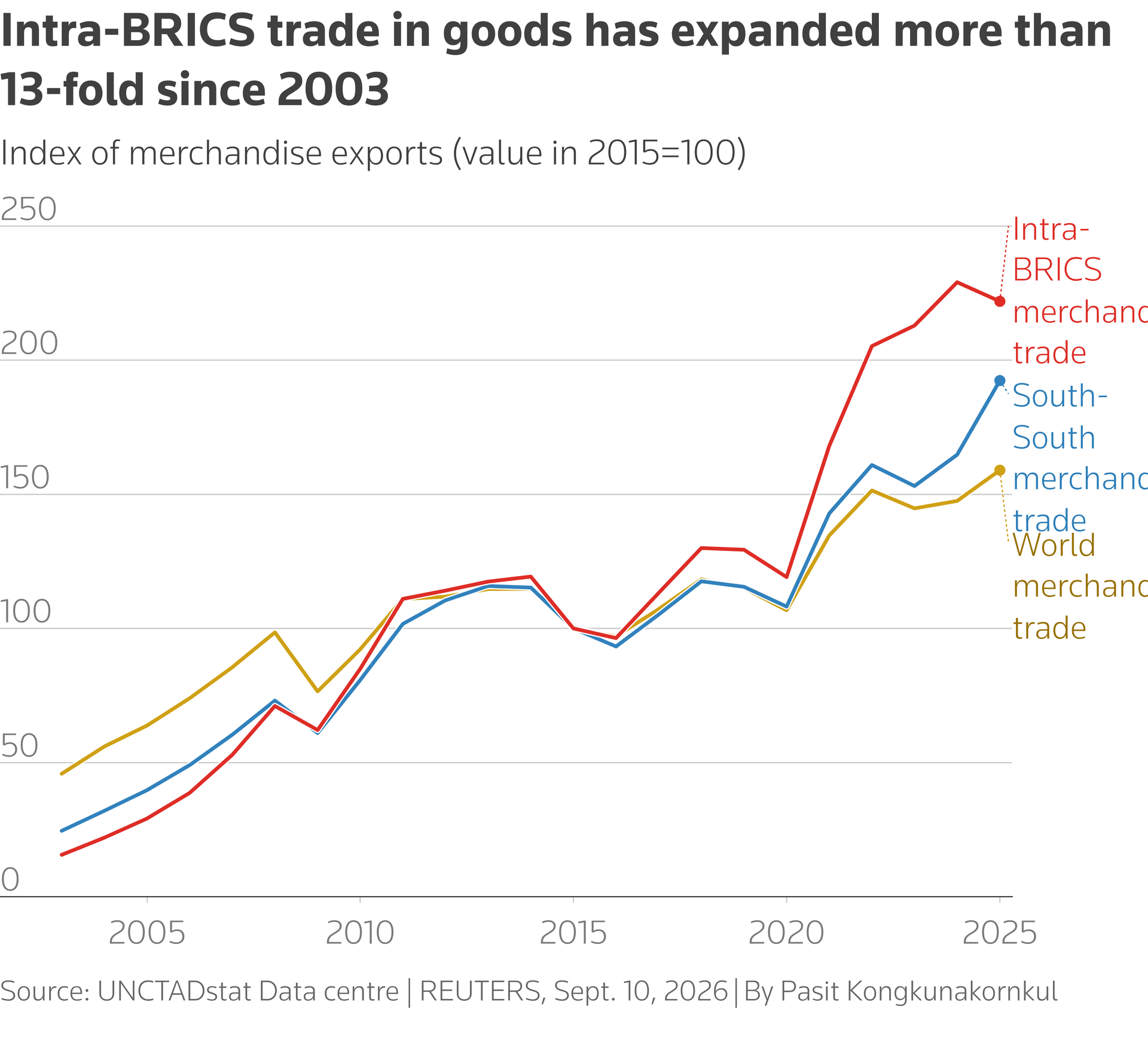
The New Delhi summit of the BRICS bloc, now comprising 11 countries, according to the official BRICS website, came a quarter century after the idea was first proposed by former Goldman Sachs economist Jim O'Neill, who argued that a group of large emerging economies could steadily command a larger share of global growth and influence.
BRICS now accounts for about 28% of global GDP.
The bloc's growing economic weight was reflected in the communique, which renewed calls for emerging economies to wield greater influence in multilateral institutions like the International Monetary Fund.
BRICS leaders also backed further efforts to promote trade settlement and investment in local currencies and make central bank digital currencies (CBDC) across these countries interoperable. Read here for more on that.
O'Neill himself believes this could be the new raison d'être for BRICS in the near future, as he told Karin Strohecker of Reuters in an interview in July. Read his comments here.
While far less provocative than the idea of a common BRICS currency — which was never widely viewed as practical — encouraging trade in local currencies and linking payment systems are seen by many analysts as a more achievable objective.
Such initiatives are unlikely to challenge the dollar's dominant role in global finance. But they could lower transaction costs, reduce remittance expenses and provide alternatives during periods of geopolitical uncertainty, said Shashwat Alok, associate professor of finance at the Indian School of Business.
But questions over which country controls the architecture could cloud progress. For instance, a payment bridge platform for CBDCs called mBridge, anchored by China, prompted India to stay away. New Delhi recently stalled a proposal for a linkage of real-time payment systems between India and China-linked Alipay+.
"Settlement infrastructure is never neutral. Whoever runs the ledger and writes the membership rules holds a chokepoint. BRICS would do well to make sure that no one country has monopoly over the trade settlement architecture," Alok said.
|
|
|
|
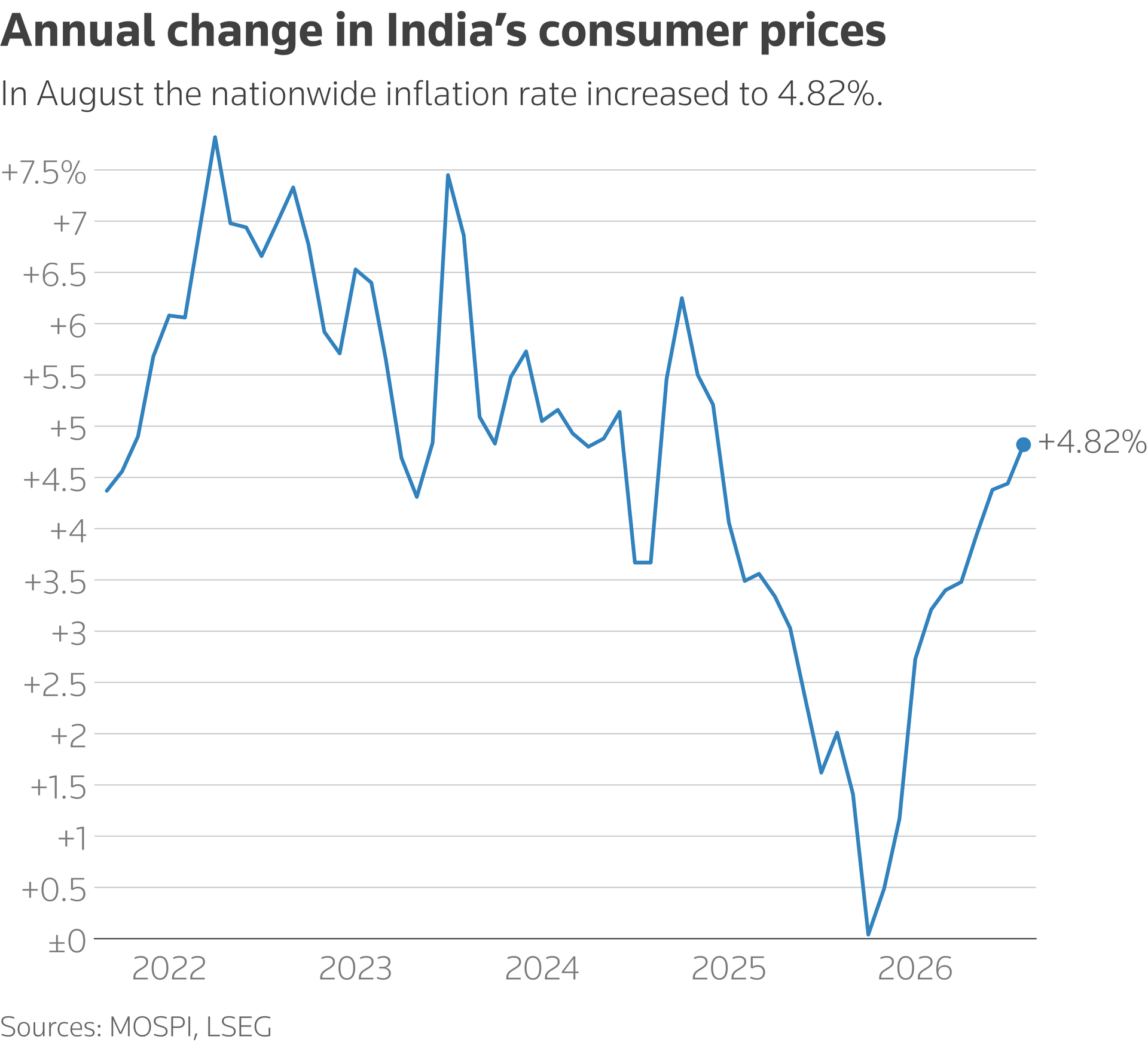
The inflation rate in India rose to 4.82% in August, remaining above the central bank's 4% target and setting the stage for its first interest rate hike in nearly four years.
Economists pointed to signs of higher food and fuel prices pushing up costs across different categories.
The Reserve Bank of India laid the ground for tighter monetary policy last week when it chose to withdraw surplus liquidity from the banking sector via bond sales.
It will likely follow this up with a 25-basis-point hike in the policy repo rate in October and another similar-sized increase in December, Soumya Kanti Ghosh, chief economist at State Bank of India, said in a note.
|
|
|
|
Top reads this week come from across the corporate sector, with India's largest exchange set for an IPO and a large conglomerate being pushed towards listing. Don't miss these stories:
|
|
|
|
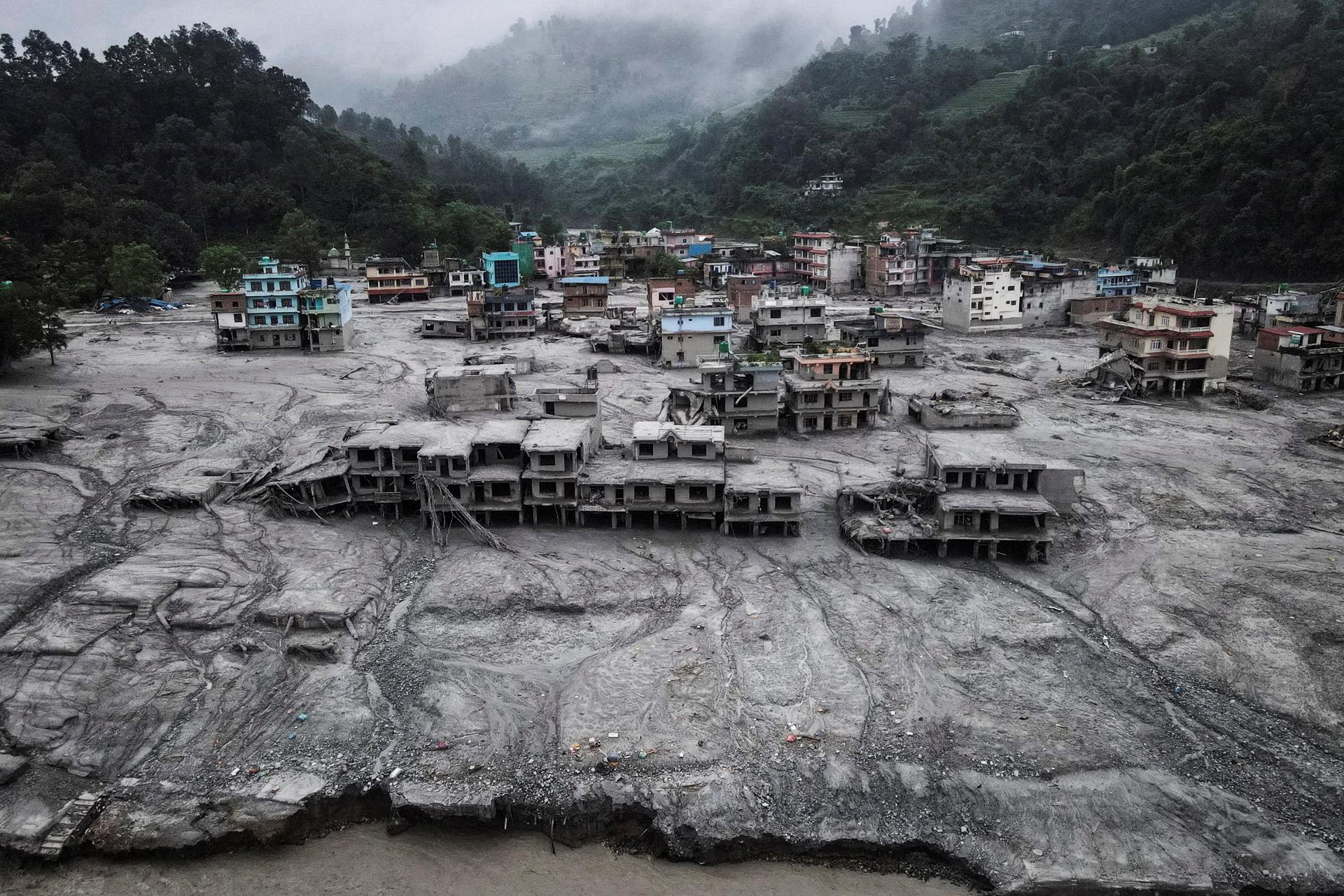
A drone view shows houses covered in mud after the flash floods and mudslide, at Devighat, Nuwakot district, Nepal, August 29, 2026. REUTERS/Francis Mascarenha
|
The story of Nepal's devastating floods is perhaps best told through pictures.
The schoolroom, gaily decorated with paintings and letters. The paint shop, where the shelves still contain rows of once colourful cans. The bathroom, the closet that held neatly piled clothing, the yards. All are now covered with a thick layer of river mud that descended without warning on bustling communities.
The Reuters team of photographers put together the scale of destruction they witnessed in this photo essay linked below.
|
|
|
|
This newsletter was edited by Muralikumar Anantharaman, Editor, Global News Desk, in Singapore.
|
|
|
|
|
| |
|
|
Reuters India File is sent once a week. Think your friend or colleague should know about us? Forward this newsletter to them. They can also sign up here. Want to stop receiving this email? Unsubscribe here. To manage which newsletters you're signed up for, click here. This email includes limited tracking for Reuters to understand whether you’ve engaged with its contents. For more information on how we process your personal information and your rights, please see our Privacy Statement. Terms & Conditions |
|
| |
© 2026 Thomson Reuters. All rights reserved.
3 Times Square, New York, NY 10036 |
|
|
|
|
|






No comments:
Post a Comment