By Blaine Rodrigues and Nidhi C. Sai
|
|
|
|
This is a special edition of the India File on the natural disaster that hit the Himalayas this week.
A catastrophic flood struck the border region of Nepal and China's Tibet on Wednesday morning, claiming over 350 lives, while nearly 1,000 people remain missing.
Read on for all the latest developments, what triggered the floods, and the accounts of survivors on the ground.
|
|
|
Hundreds killed, a thousand missing |
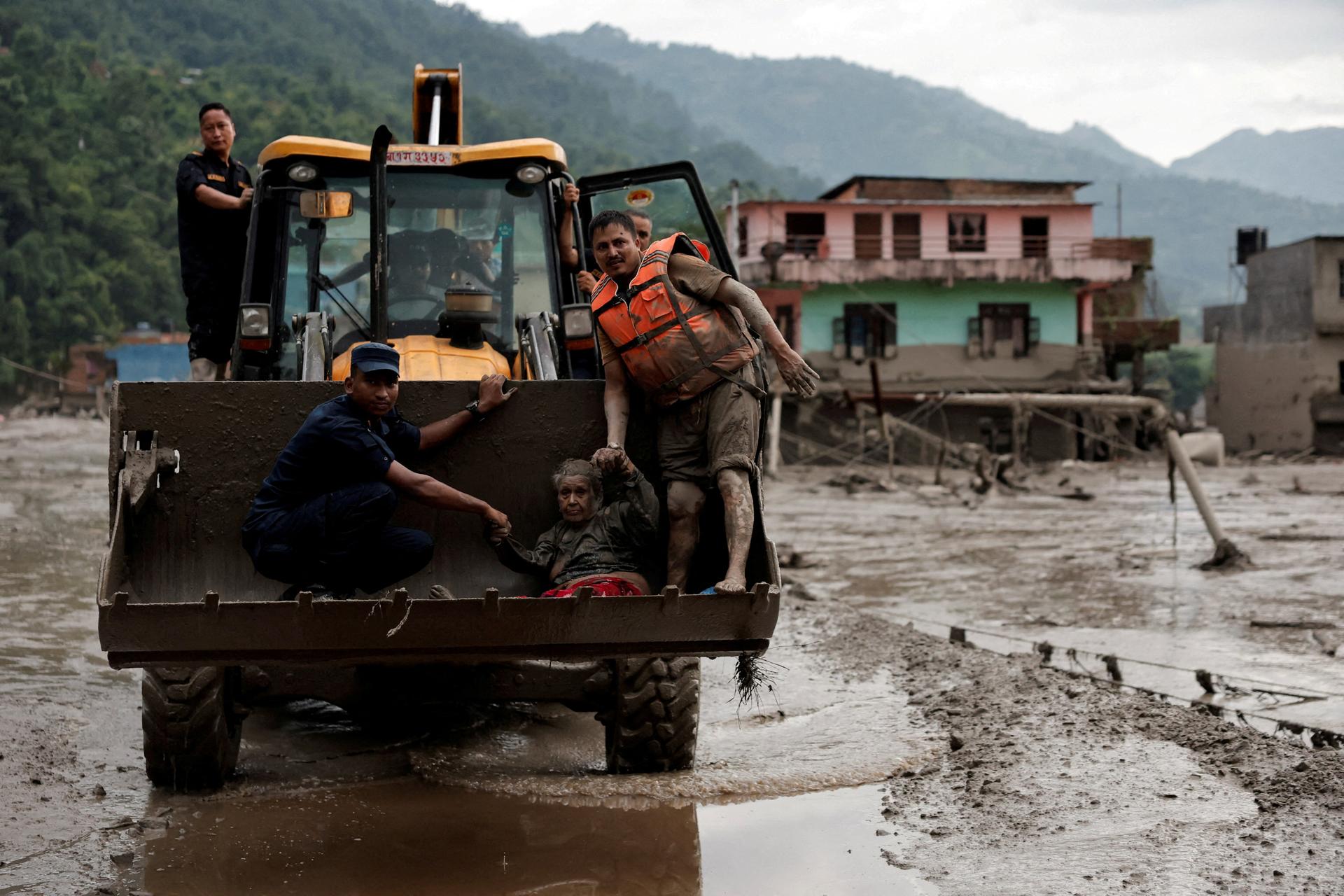
A survivor is transported to a safer place in heavy machinery following a flash flood at Trishuli in Nuwakot district, Nepal, August 26, 2026. REUTERS/Navesh Chitrakar
|
A glacier collapse sent a torrent of ice, rock, and mud cascading through villages and key infrastructure along the Nepal-Tibet border. Rescuers and helicopters continue searching for survivors, though authorities warn the death toll will rise as rescue operations unfold in the remote mountainous terrain.
Around 540 foreigners from 31 countries remain missing, including at least 288 Indians unaccounted for in Nepal and another 200 stranded in China.
Meanwhile, Nepal and China have warned of additional flooding threats as two lakes that formed on either side of the border risk bursting, compounding the disaster still unfolding in the region.
Global aid is flowing in, with countries and organisations worldwide offering to send relief supplies and assistance. Here is a list of aid delivered so far.
The disaster presents a major test for Nepali Prime Minister Balendra Shah's five-month-old government, though officials said the country had systems and personnel who have experience in handling such tragedies, including the 2015 earthquake that killed nearly 9,000 people.
|
Eyewitness footage captured a flood sweeping through a village in Nepal's Himalayan region, after a massive collapse of mud and rock triggered catastrophic flooding near the border with China's Tibet region, August 26, 2026. (Reuters YouTube)
|
|
|
|
What triggered the floods? |
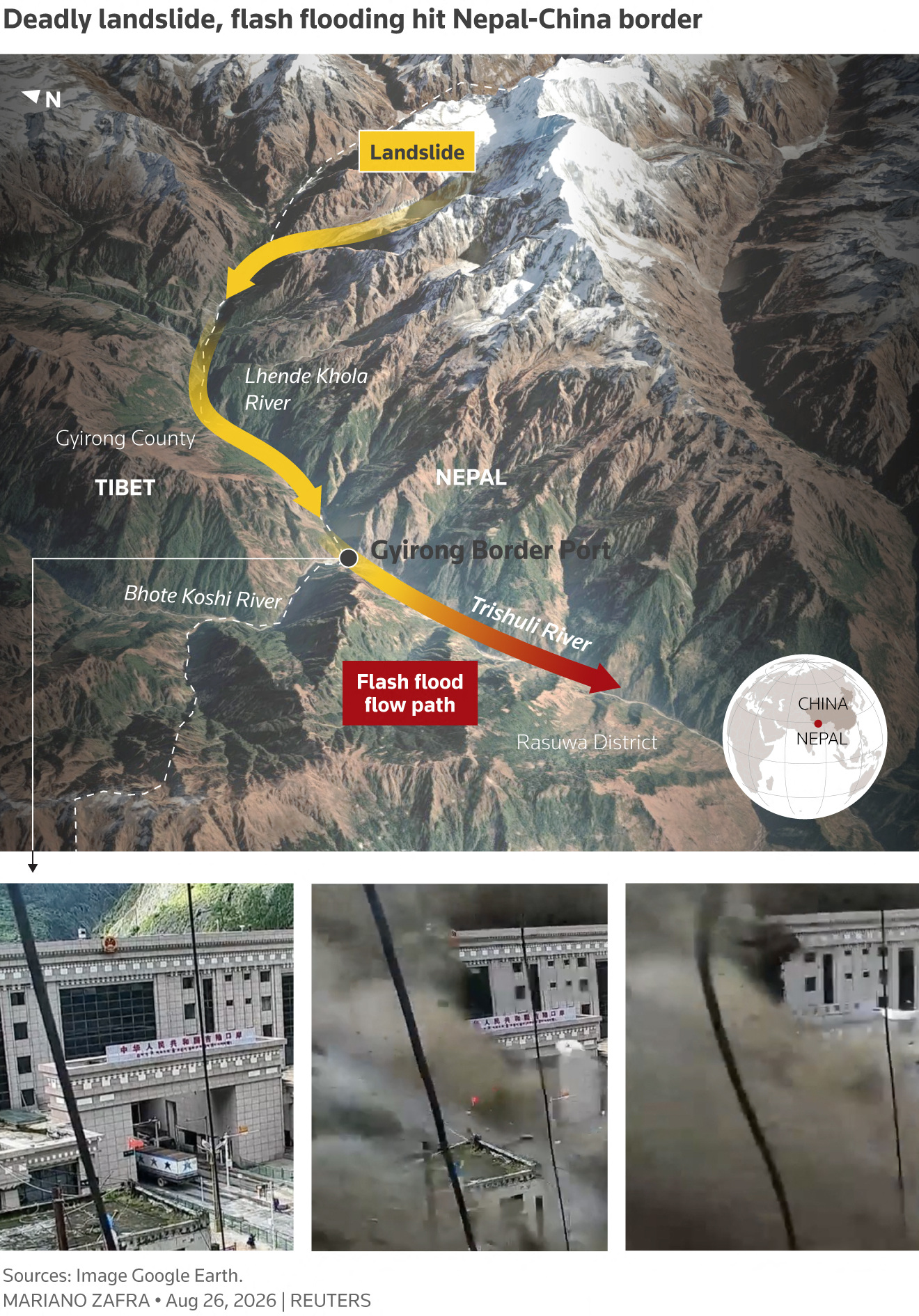
Experts believe a glacier collapse may have triggered the deadly flash flood.
The lower part of a glacier caved in the Himalayas, sending an avalanche of ice, rock, and mud down the Lhende Khola river — which runs along the Nepal-Tibet border. The mudslide slammed into Gyirong port in Tibet and downstream areas in Nepal, unleashing high-speed flash floods through a route heavily traveled by trekkers and pilgrims linking Kathmandu to Lhasa. Read more in this graphic story.
Initially, Nepali officials suspected an earthquake, but the U.S. Geological Survey determined the seismic activity was generated by the glacial collapse itself and the resulting debris flow.
Experts, citing imagery from Planet Labs, believe that a substantial portion of the glacier collapsed to initiate the event with a large amount of snow appearing to have melted in the hours prior to the disaster.
|
|
|
|
Scientists say climate change is to blame, but experts caution against attributing the event solely to climate change. Still, rising temperatures and melting glaciers probably played a role in the disaster.
The United Nations had said in 2023 that global warming caused Nepal's snow-capped mountains to lose close to one-third of their ice cover in just over 30 years.
|
|
|
|
Nepali labourer Bibek Kumal was digging a pit outside his newly built house when he was swept away by the wall of water, mud and rock. He clung on to a mango tree that prevented him from being washed away. Read his full account here.
Others were not so lucky. Keshav Prasad Baral, a 68-year-old survivor being treated in hospital, tried to grab his wife but she was swept away by the mud.
"My wife is still somewhere beneath the mud," he said. "She's gone."
Anxious families across India have inundated government hotlines and tour operators as they seek information about loved ones who went on a pilgrimage to Mount Kailash.
Nearly 60 people were part of a tour group that went on a pilgrimage and are still missing.
|
|
|
|
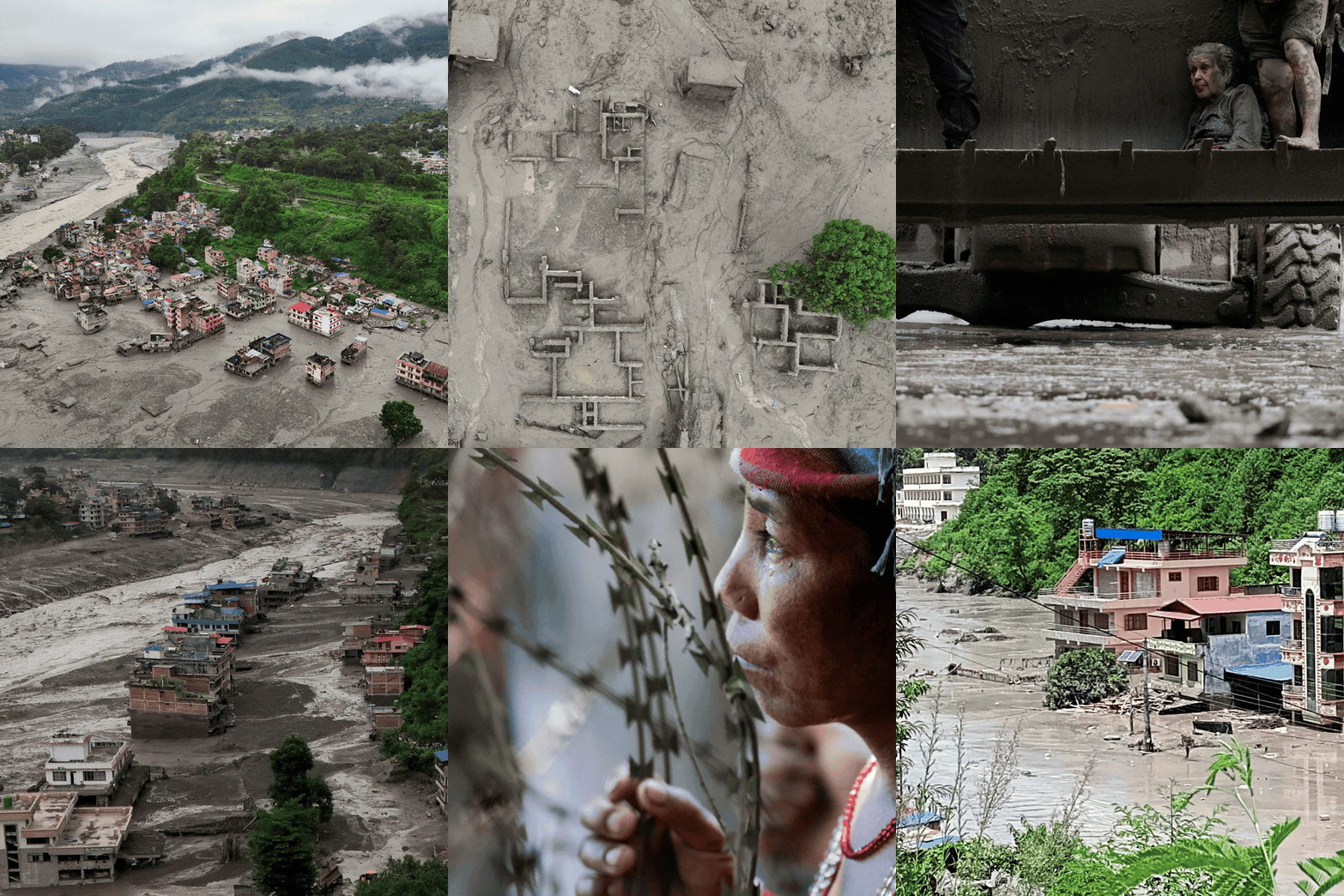
Reuters photographers on the ground capture the intensity of the catastrophe and how survivors are trying to escape.
|
|
|
|
This newsletter was edited by Muralikumar Anantharaman in Singapore
|
|
|
|
|
| |
|
|
Reuters India File is sent once a week. Think your friend or colleague should know about us? Forward this newsletter to them. They can also sign up here. Want to stop receiving this email? Unsubscribe here. To manage which newsletters you're signed up for, click here. This email includes limited tracking for Reuters to understand whether you’ve engaged with its contents. For more information on how we process your personal information and your rights, please see our Privacy Statement. Terms & Conditions |
|
| |
© 2026 Thomson Reuters. All rights reserved.
3 Times Square, New York, NY 10036 |
|
|
|
|
|








No comments:
Post a Comment