A look at the day ahead in European and global markets
|
|
|
|
By Stella Qiu, Australia Economics & Markets Correspondent
|
|
|
|
|
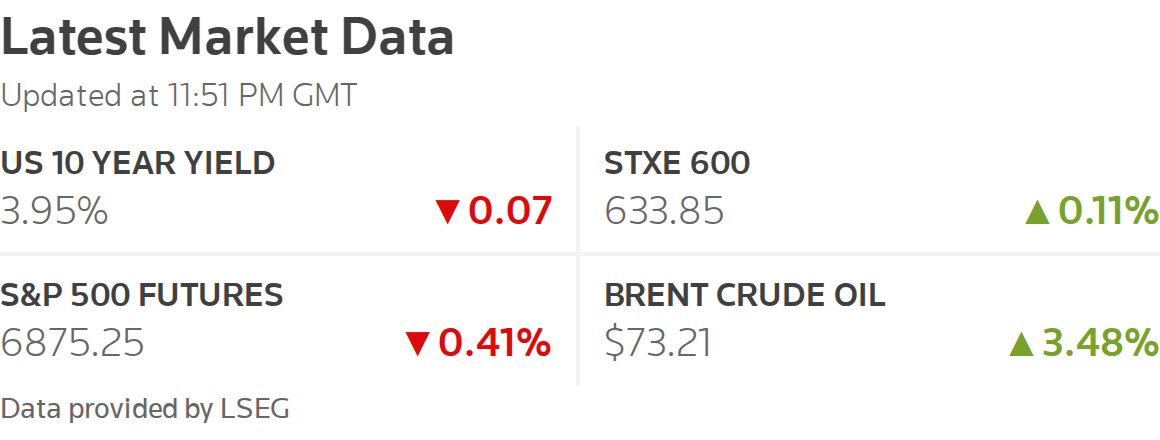
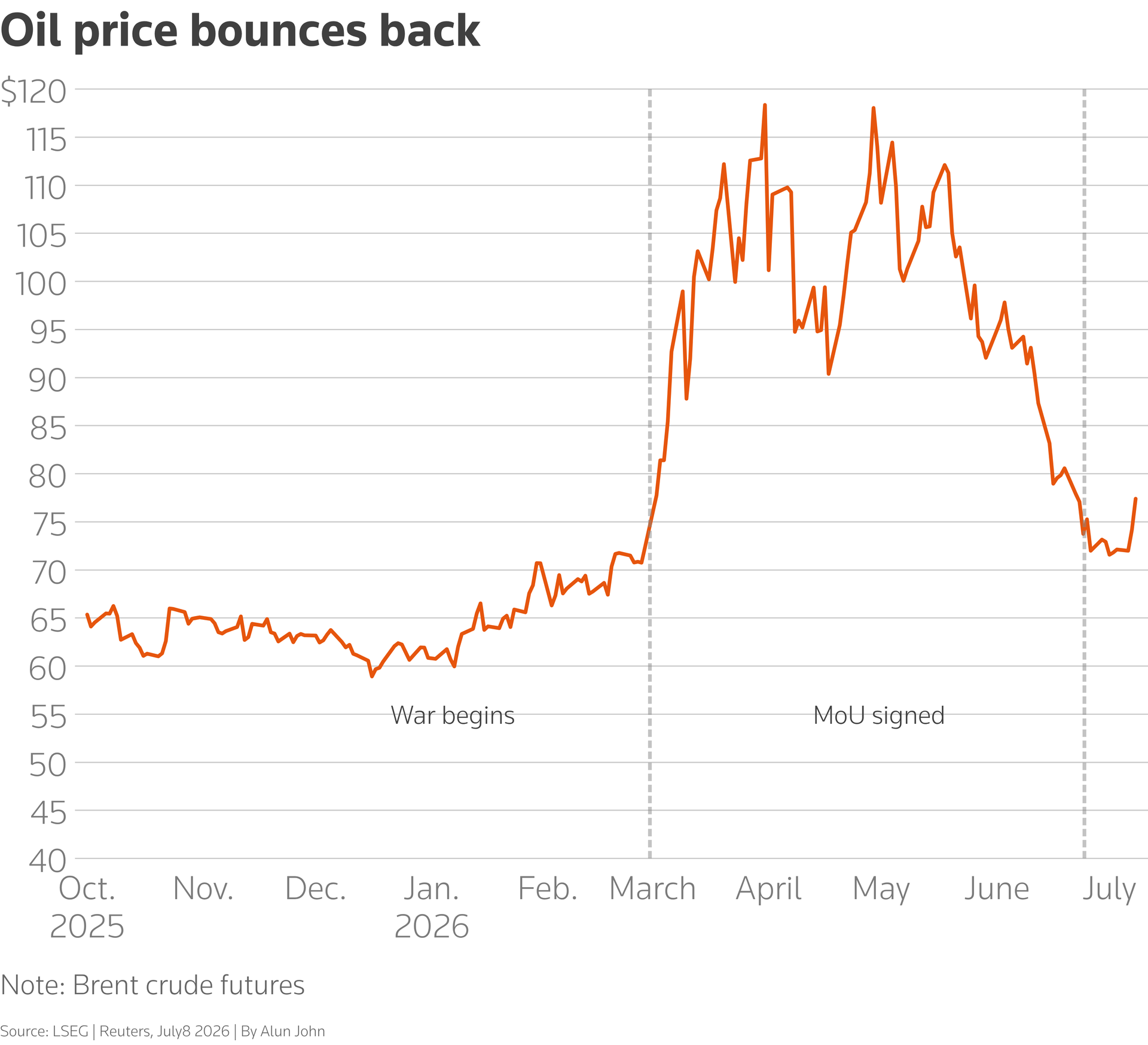
The U.S. bombed Iran for a second day, Iran struck U.S. bases in the Gulf and oil prices have jumped almost 10% in three days, with President Donald Trump declaring on Wednesday the interim deal with Iran and further talks to end the war were "over".
If there's one bright spot it's that, despite the danger, shipping is still transiting the Strait of Hormuz, albeit at a reduced volume.
|
|
|
|
The SK Hynix logo and a computer motherboard appear in this illustration taken August 25, 2025. REUTERS/Dado Ruvic/Illustration/File Photo
|
Stock investors in Asia initially shrugged and bought the dip in chipmakers, wagering it would prove another "TACO" moment, but that did not last for long.
Japan's Nikkei is still up 1.8% to break a three-day losing streak, while South Korea's KOSPI climbed 4% before turning lower to hit a seven-week trough.
European bourses bucked the trend, with pan-region stock futures up 0.8%. Wall Street futures were flat.
The chip enthusiasm is not entirely misplaced. Demand for SK Hynix's U.S. share offering was more than seven times the available shares, while China's top memory chipmaker ChangXin Memory Technologies (CXMT) is set to begin book-building next Wednesday for its Shanghai IPO.
However, the bond market is flashing warning signs over inflation, and the rise in oil prices is much worse for Asia due to the regional dependence on energy imports.
The bond rout sent the yield on 10-year Japanese government bonds to a 30-year high of 2.885%.
|
Graphics are produced by Reuters
|
|
|
|
The risk of a renewed energy shock led markets to ramp up wagers the Federal Reserve will have to raise interest rates this year.
Fed funds futures now imply 38 basis points of tightening this year, back to the levels a week ago. Minutes from the U.S. central bank's last meeting showed a few policymakers already wanted to raise rates last month.
Currency markets seemed little troubled, with the dollar broadly steady on the majors. It was just a shade lower on the yen at 162.48, lurking just below the recent 40-year peak of 162.84 as speculators remain wary of Japanese intervention.
Yet, the balance of risks still points to higher oil prices. Iran appears determined to assert its influence over shipping in the strait, while Washington and Gulf states insist on preserving freedom of navigation. That standoff creates the conditions for a prolonged crisis.
Stock investors are reckoning with this new reality as higher oil prices feed into inflation and risk, pushing the Fed to tighten monetary policy. New York Fed President John Williams may have something to say on rates later in the day.
|
|
|
|
Key developments that could influence markets on Thursday: |
- German trade data for May
- ECB accounts of its June policy meeting
- U.S. weekly jobless claims
- New York Fed President John Williams, Dallas Fed President Lorie Logan and BoE Deputy Governor Sarah Breeden speak at an event in New York
|
|
|
|
Opinions expressed are those of the author. They do not reflect the views of Reuters News, which, under the Trust Principles, is committed to integrity, independence, and freedom from bias.
|
|
|
|
|
|
| |
|
|
Morning Bid is sent every weekday morning. Think your friend or colleague should know about us? Forward this newsletter to them. They can also sign up here. Want to stop receiving this email? Unsubscribe here. To manage which newsletters you're signed up for, click here. This email includes limited tracking for Reuters to understand whether you’ve engaged with its contents. For more information on how we process your personal information and your rights, please see our Privacy Statement. Terms & Conditions |
|
| |
© 2026 Thomson Reuters. All rights reserved.
3 Times Square, New York, NY 10036 |
|
|
|
|
|







No comments:
Post a Comment