After all, with markets used to solid revenue beats from the chipmaker for 14 successive quarters, Wednesday's outcome hardly knocked the lights out.
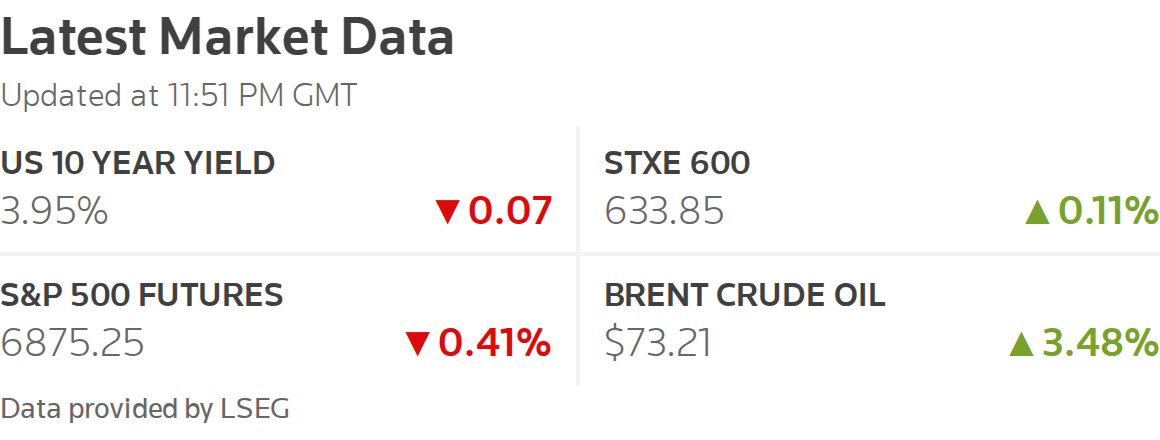
At the very least, however, it put concern over AI-driven market disruption and attendant costs on the back burner. Stocks in Asia rose in a relief rally on Thursday, though U.S. and European futures traded lower.
Investors have blown hot and cold on the AI trade in recent weeks, worried about returns on investment and its potential to upend entire industries, yet hesitant to sit on the sidelines.
Analysts have also said the AI boom is no longer going to be the tide that lifts all boats.
Elsewhere, geopolitics continued to cast a cloud over markets.
U.S. and Iranian negotiators are due to meet in Geneva later on Thursday for their third round of talks this year about the latter's nuclear activity. At the same time, the U.S. has built up one of its biggest military deployments in the Middle East ahead of possible strikes on the Islamic Republic.
U.S. President Donald Trump had briefly laid out his case for a possible attack on Iran in his State of the Union speech earlier this week, saying his preference was to solve the problem through diplomacy, but that he would not allow Tehran to have a nuclear weapon. Iran has said its nuclear activity is for civilian energy production.
That U.S. rhetoric kept oil prices elevated on Thursday, as investors fretted about potential supply disruption in the event of a conflict.






No comments:
Post a Comment