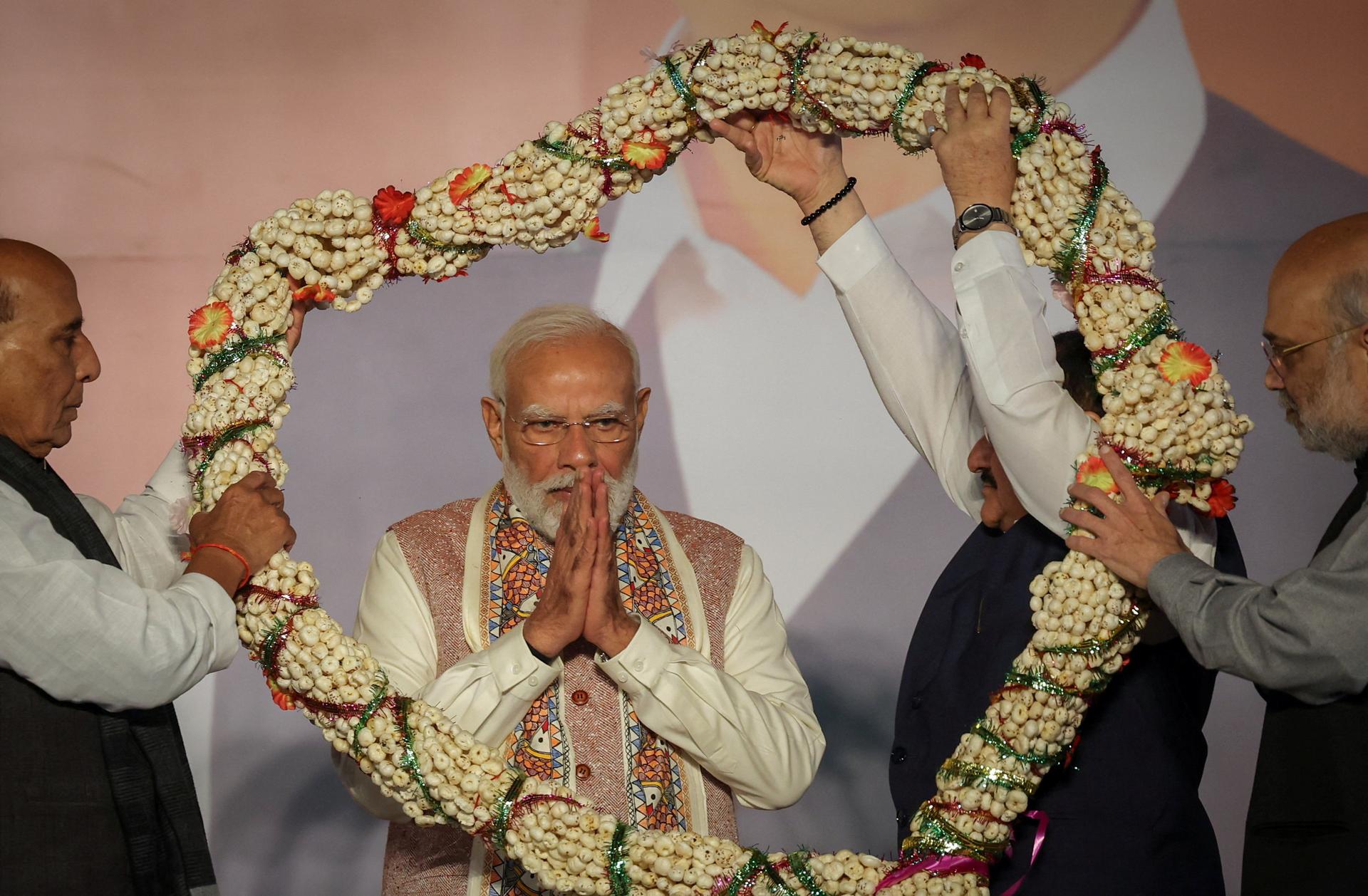
The regional alliance of Modi's Bharatiya Janata Party stormed polls in the eastern state of Bihar, cementing control over a politically crucial state.
The winning formula? A pledge of 10,000 Indian rupees ($113) in cash transfers to low-income women — a tactic now standard in state elections.
But freebies, which are sold as development schemes and are therefore not a violation of India's election rules, don't come free.
Over the past two years, 14 states have dangled similar schemes, pushing the annual tab close to 2 trillion rupees, or $22.56 billion, according to economists at Axis Bank.
Cash grants were a major factor behind the clean sweep in the Bihar elections, "proving once again that freebies/populist spendings are now an inextricable part of state electoral dynamics", said Madhavi Arora, chief economist at Mumbai-based brokerage Emkay Global.
Political parties across the spectrum have resorted to such dole-outs but their impact for the BJP is maximum as the ruling party has won five out of the six state elections since a narrower-than-expected win in national elections in 2024.
With elections due in at least three large states in the next year, the trend could mean a "race to the bottom", Arora said.
The fiscal profligacy by states is undoing some of the progress made by the federal government in improving its own finances.
While the federal government's deficit is forecast to decline to 4.4% of GDP this year from 4.8% last year, the situation is a "much less healthy" 7.5% of GDP if the states are included, Jefferies' global head of equity strategy Christopher Wood wrote last week, citing the growing populism of state governments.
The combined deficit is what matters to global sovereign rating agencies and to bond markets.
Fitch Ratings and Moody's both retained India's rating this year citing the still high debt-to-GDP ratio of 83% in fiscal 2025, even though S&P Global Ratings upgraded India because of its strong growth outlook.






No comments:
Post a Comment